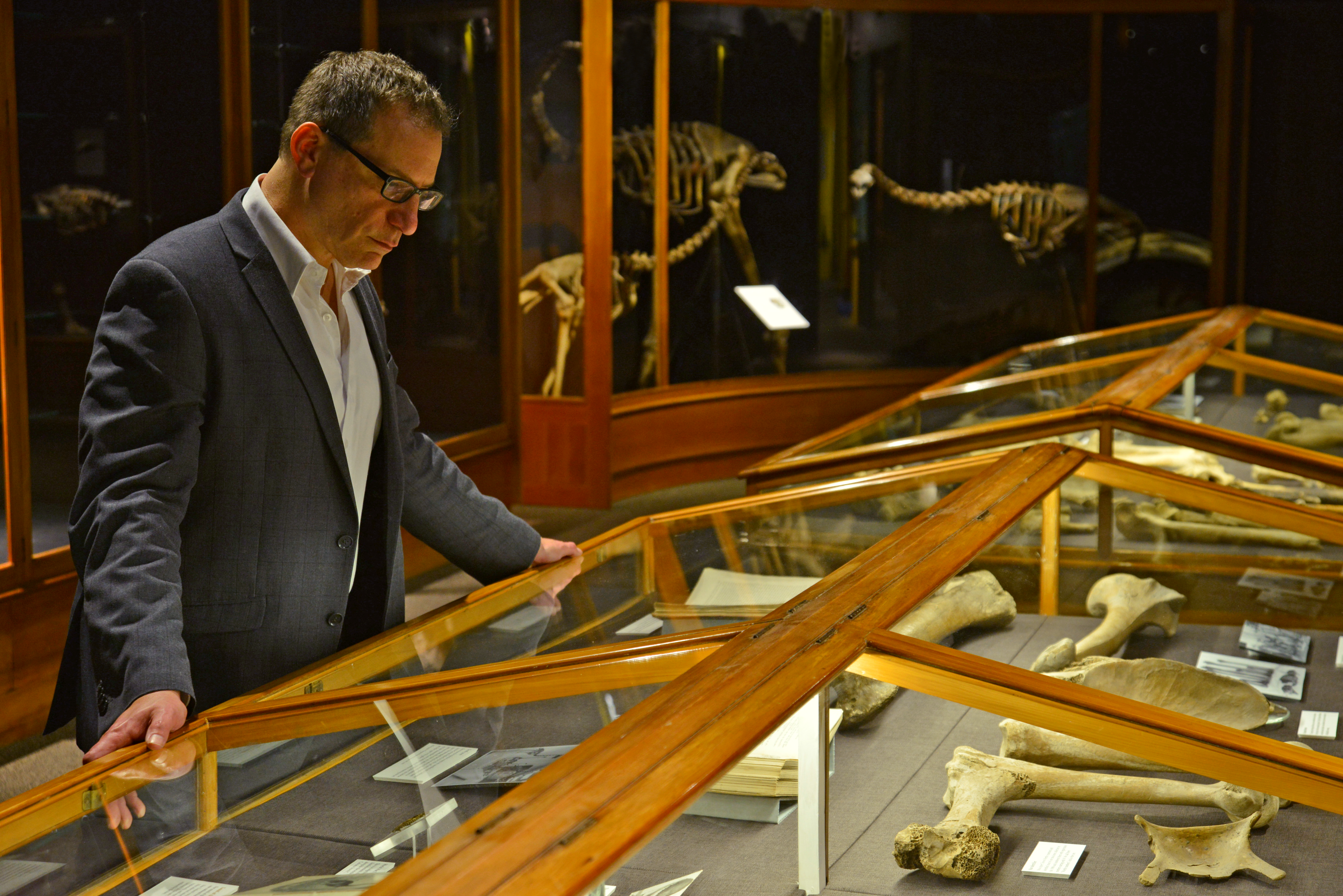
I am fortunate to work in and contribute to the sector of collecting institutions. Many of these world-class organizations use science to advance planetary and public good. On this page you will find you will find a very brief summary of my history.
Author.
Making a positive difference has been a prime motivator over most of my career. One of the most important outlets for me to achieve this has been through writing. I derive great satisfaction from using the written word to deliver messages based in scientific principles that resonate with a non-scientific audience. This can be in the form of exhibition labels, articles, my blog, or in books. Most recently, I contributed the definition of natural history museums for the Dictionary of Museology (Routledge, 2023).
Thinker.
Of all the scientific concepts put forward in the last decades, the ones that resonate with me most are those that capture, in some way, humanity’s relationship with nature. Biophilia, for instance, was popularized by the late E. O. Wilson to describe people’s inclination to affiliate with nonhuman species. Perhaps the one that resonates most, and certainly the one with which I’ve had the most contact is the Anthropocene. This is term that describes the period in history in which global human activities began to have an impact on the geological record. It is likely, in the near future, to become an official epoch, recognized by the International Commission on Stratigraphy.
Changing climate, changing species composition across the globe, microplastics throughout our ecosystems and our bodies, are just a few of the ways that evidence of our activities will be present in the Earth’s crust millions of years from now (assuming there’s anybody around to look). Much of the planetary signature we have created has to do with the relationship humans have with nature. This has been the thrust of the podcast Love Nature, which I co-hosted with my friend and colleague Dr. Dan Dombrowski. I’m proud that it ranked by listenership in the top 10% of all podcasts globally.
Our relationship with nature also informs my research on waterbirds and wetlands, in which I focus on human dominated landscapes. This research program has lasted 20 years (on and off) through various institutions and environmental conditions.
Other things.
It’s my honor to serve as President of the Linda Hall Library, in Kansas City, MO. The Library’s holdings of over two million books, journals and hard-to-find conference proceedings are dedicated to science, technology, and engineering. With rare works going back to the 1472, their collections make it one of the most prestigious science institutions in the United States. Founded in 1946, the Library sits on the former estate of its founders the Hall family, which is now a scenic arboretum. It has been stewarded since its inception by a board of trustees led by generations of the Bartlett family. Their commitment to supporting the pursuit of knowledge, along with their investment in world-class collections, have created a truly remarkable resource locally and internationally. It will be my privilege to ensure the library flourishes, expanding the horizons of this unique resource.
Before this, I’ve been in both academic and museum settings, most recently a research professor in the Department of Marine, Earth and Atmospheric Sciences at North Carolina State University and CEO of the Museum of Natural Sciences. My first leadership role was as the Director of Whanganui Regional Museum in New Zealand and I’ve led others, including Pittsburgh’s Carnegie Museum of Natural History.
I’m also active internationally, most recently serving as an executive board member of the International Council of Museums (ICOM) and for nine years served as chair of ICOM’s International Committee for Museums and Collections of Natural History (NATHIST), as well as deputy chair of the international ethics committee (ETHCOM).
For media queries, please contact: Andrew Meiller 816.381.2600 | andrew.meiller@cruxkc.com
 ERIC DORFMAN