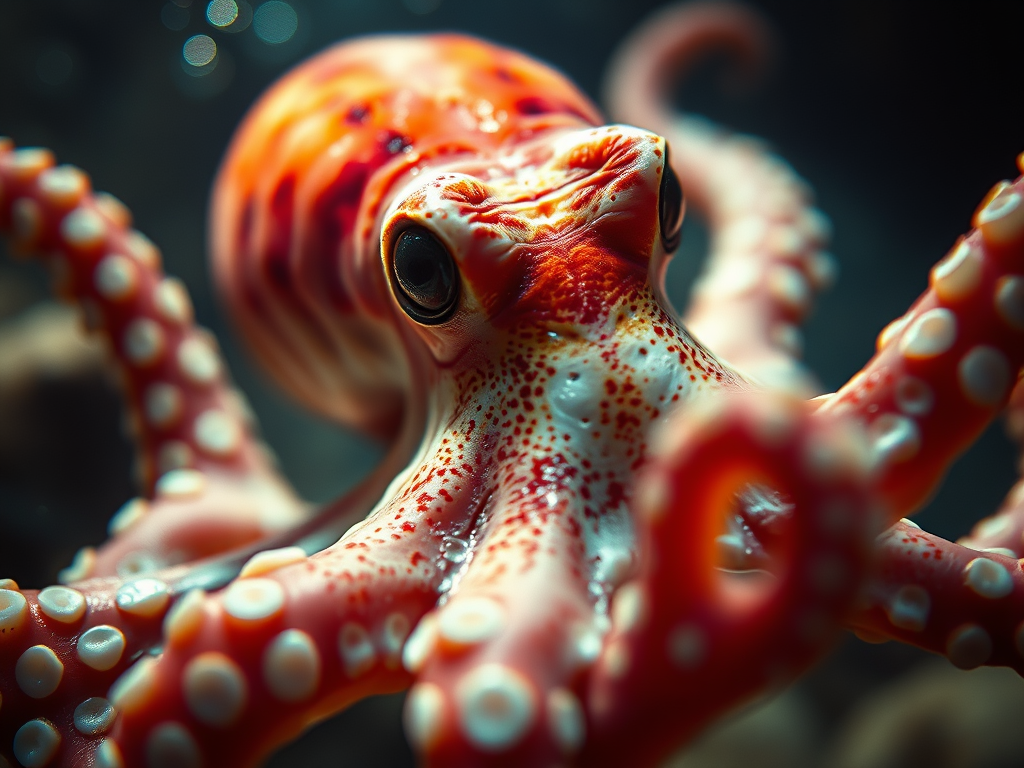
In a recent blog post, I explored the intriguing hypothesis that octopus intelligence may have extraterrestrial origins, as proposed by a global team of researchers, as part of the Astrobiology section of the upcoming Life Beyond Earth? exhibition at the Linda Hall Library. The idea was tantalizing—a species so vastly different from anything else on Earth might owe its unique traits to another world. When it was published, the idea was picked up by popular media and octopus fans alike. However, on closer examination, it just doesn’t hold up to scientific scrutiny. Let’s dive into why this idea gained traction and how confirmation bias plays a crucial role in shaping what we’re willing to believe.
Research Behind the Claim
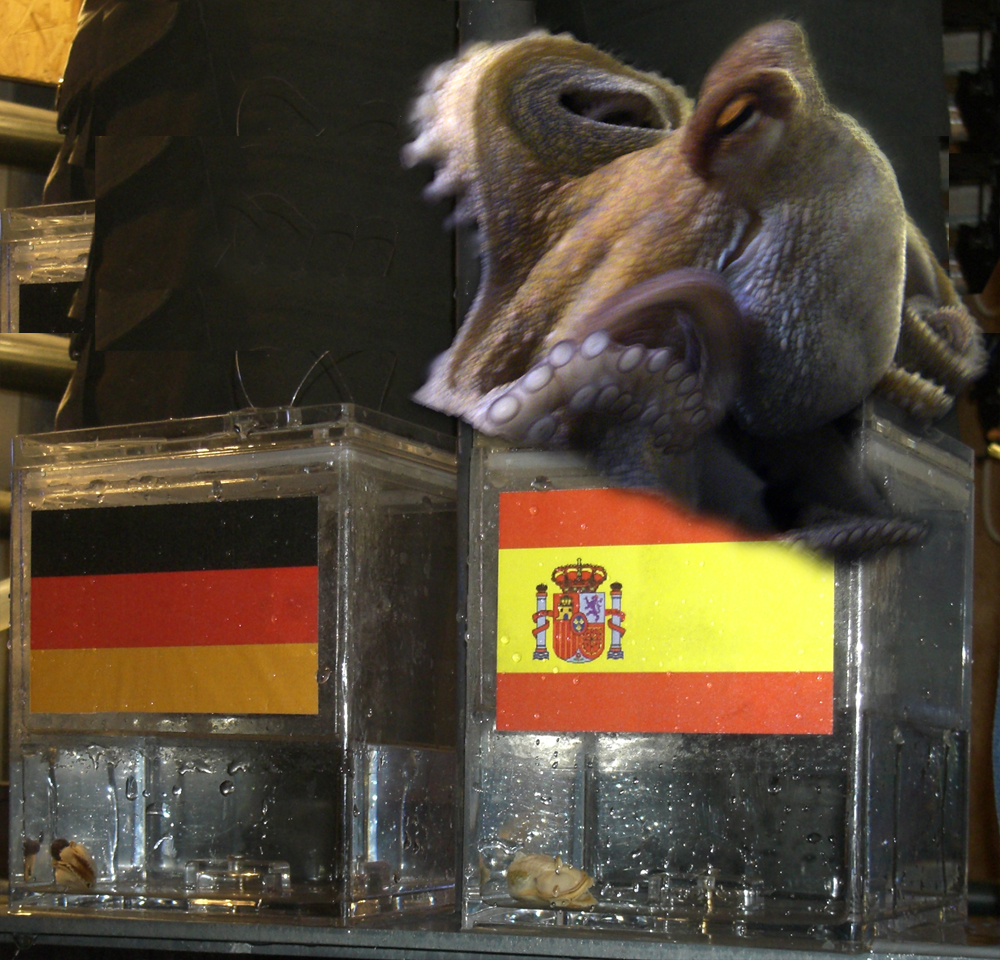
The idea of extraterrestrial origins for octopuses largely stems from a 2018 paper in Progress in Biophysics and Molecular Biology entitled “Cause of Cambrian Explosion – Terrestrial or Cosmic?”. The paper posited that intelligence in cephalopods, especially octopuses, might have originated from an extraterrestrial source – such as an asteroid or comet -carrying genetic material catalyzed the evolutionary trajectory of their distant ancestors. The hypothesis that errant DNA is traveling the universe seeding interplanetary life is called “panspermia.” The theory caught the attention of the public (myself included) because octopuses are undeniably extraordinary creatures: they can solve puzzles, use tools, and even display what we might interpret as problem-solving skills usually reserved for primates. Remember Paul the Octopus who achieved icon status for (apparently) predicting the results of the 2010 Soccer World Cup?
But let’s take a pause. Extraordinary claims require extraordinary evidence. In science, there is a premise called “parsimony” (also known as Occam’s Razor), which refers to the idea that among competing explanations the simplest is the most likely. Why would you need to invoke an extraterrestrial origin theory, which must, by its nature, rely more on conjecture than empirical evidence, when a terrestrial explanation based in genetic research is simpler and perfectly adequate.

Breaking Down the Myth
To be clear, (and admittedly a little disappointing) there’s no concrete scientific data to support octopuses – or any species on Earth – being of alien origin. According to the fact-checking website Snopes, as well as the broader scientific community, the idea that octopuses have alien DNA doesn’t hold water. Studies of the octopus genome reveal that while these creatures are remarkable, their evolutionary history is consistent with the rest of life on Earth. Octopuses belong to the cephalopod class, a group that includes squids, cuttlefish, and nautilus, all of which share a common evolutionary ancestor that lived more than 500 million years ago.
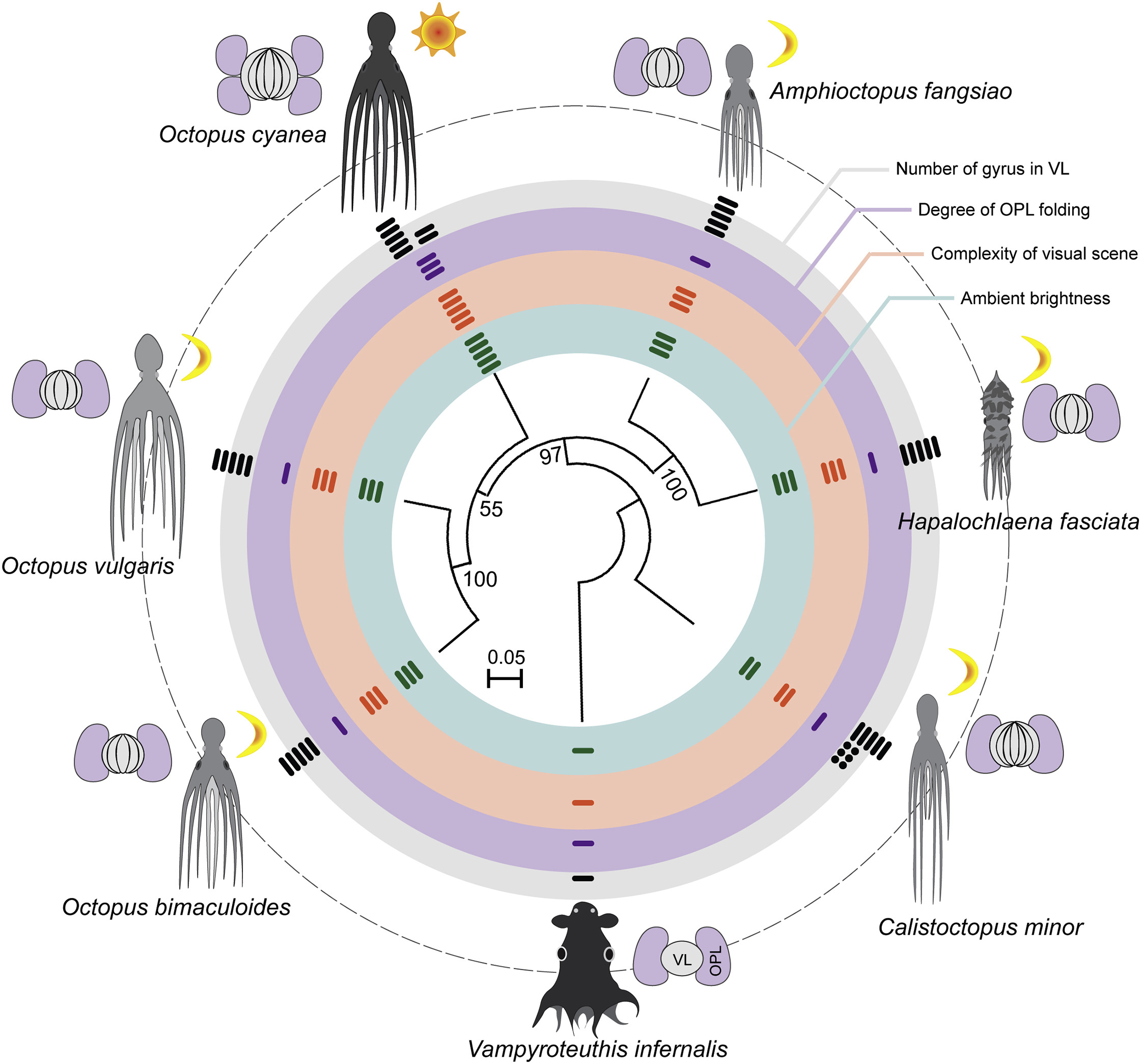
Over time, cephalopods evolved from a shelled ancestor into the soft-bodied creatures we know today, adapting to a range of marine environments. Natural selection played a key role in shaping the incredible traits we associate with octopuses. For instance, their intelligence likely evolved as a survival mechanism in complex environments, where problem-solving skills help them evade predators, hunt, and take advantage of novel opportunities in their surroundings. Their ability to camouflage and change color probably evolved in response to predation pressures, allowing them to blend seamlessly into their environment. Support for this idea comes from, among other things, the comparative brain anatomy from octopus from different habitats, research by Wen-Sun Chung of the The University of Queensland in Australia.
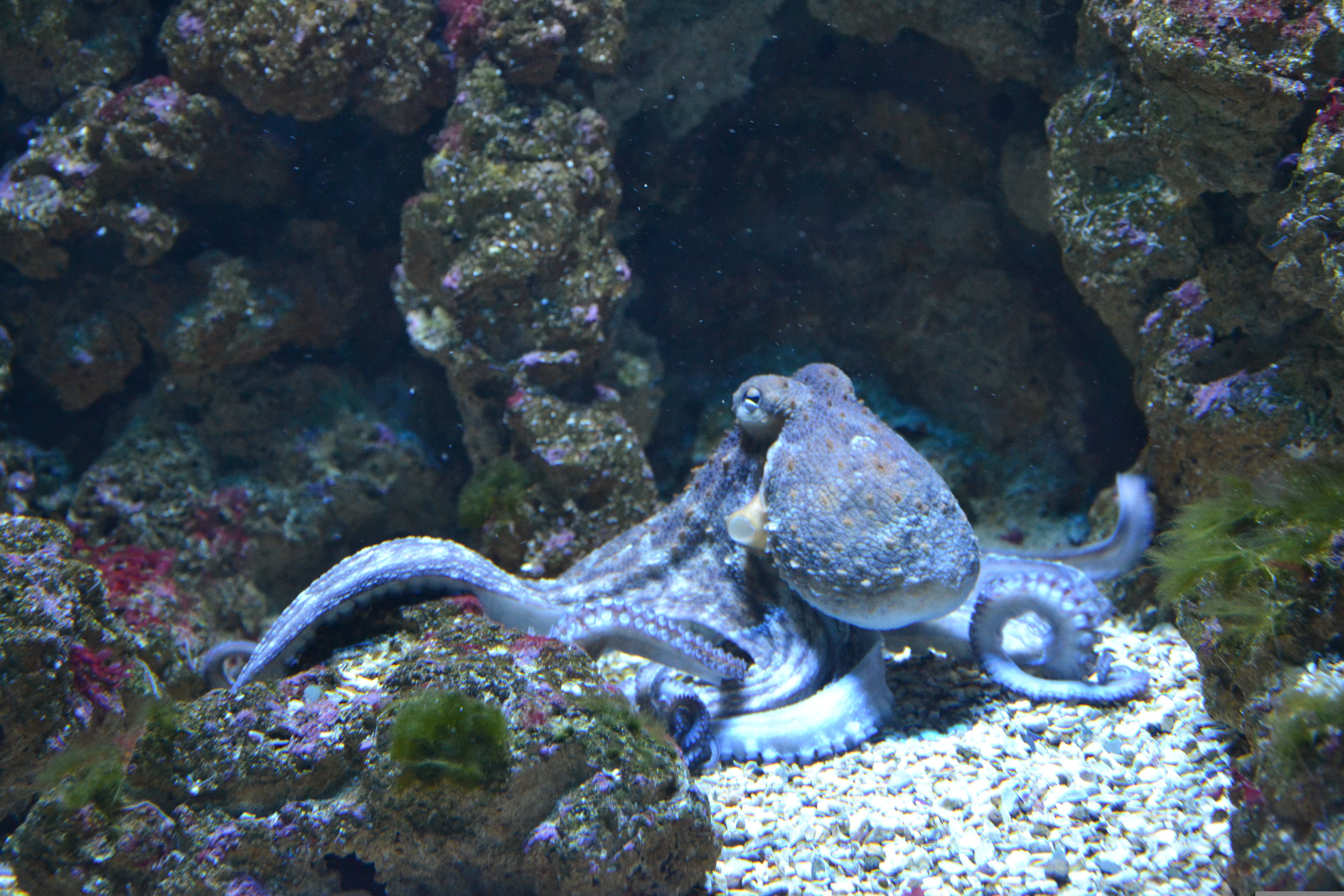
Even their nervous systems, often cited as evidence of their “alien-like” nature, evolved through entirely Earth-based processes. The octopus has a highly decentralized brain structure, with two-thirds of its neurons spread across its arms, allowing them to process information and react quickly to environmental changes. While this is fundamentally unlike anything seen in vertebrates, it still fits within the realm of what can be explained by a trajectory of evolution on Earth.
The Role of Confirmation Bias
So why does the alien octopus theory persist at least in the popular media, despite an overwhelming lack of scientific evidence? Some of the answer could lie in confirmation bias, a psychological phenomenon first coined by British cognitive psychologist Peter Wason in 1960. Confirmation bias is the tendency to seek out, interpret, and remember information that aligns with our preexisting beliefs or desires, while disregarding information that contradicts them. It’s something we’re all susceptible to, and it profoundly shapes how we perceive the world around us.
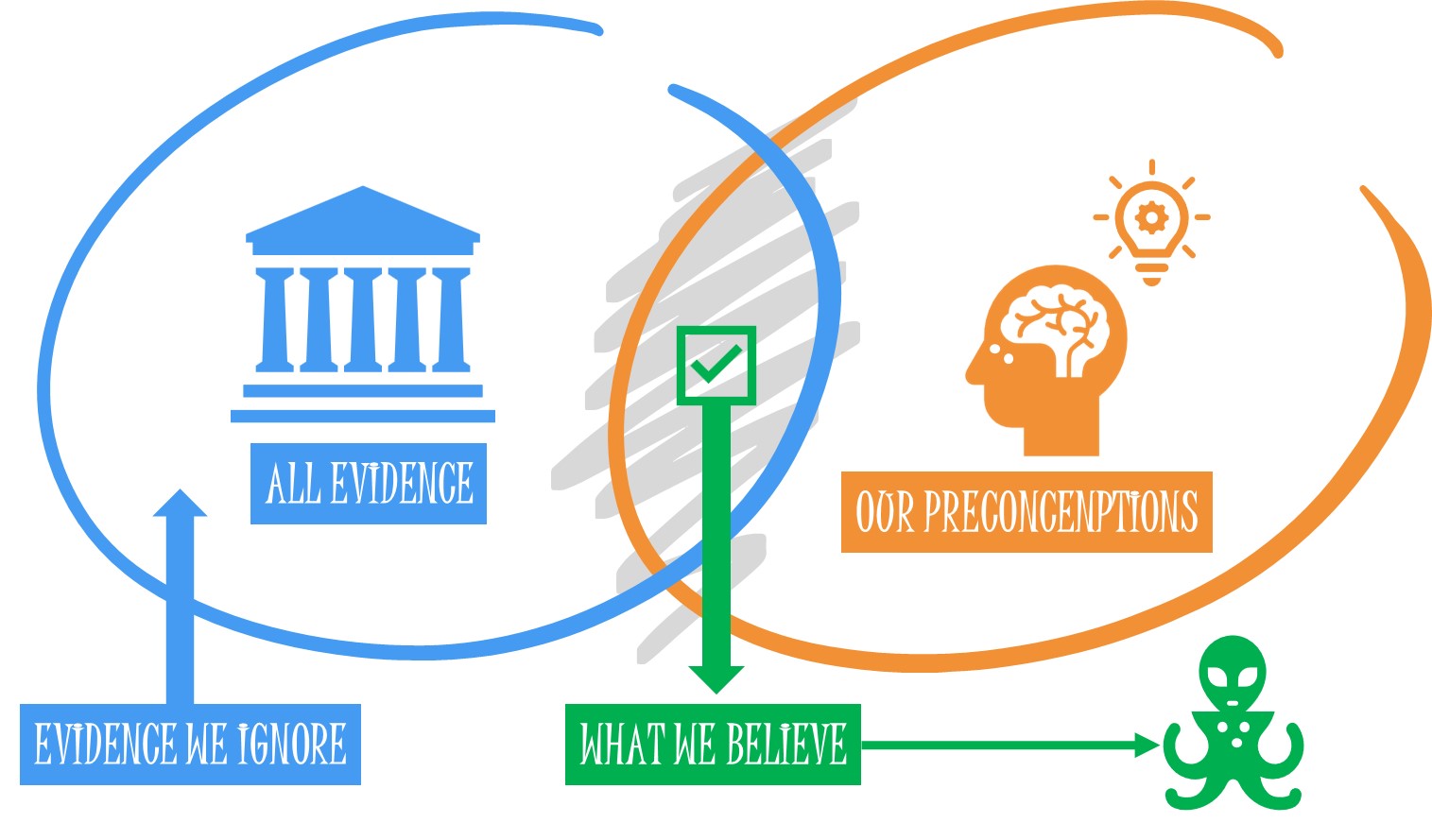
In the case of octopuses, they seem so alien to our eyes that we might be more inclined to accept a complicated (less parsimonious) theory, such as their extraterrestrial origins, rather than accept the more straightforward (read dull?) Earth-based processes of evolution. This is where confirmation bias plays a significant role: we’re predisposed to find patterns and narratives that confirm what we already think or hope might be true. It’s the same psychological mechanism that makes practices like tarot cards or astrology feel so “accurate” to those who believe in them. When reading a tarot card spread or an astrological horoscope, people often interpret vague or general statements as personally meaningful, even though those same statements could apply to countless others. The accuracy seems real because we selectively focus on the parts that resonate with us while ignoring anything that doesn’t fit our expectations.
In much the same way, the alien octopus theory seems to gain traction because it fits into a preexisting narrative: we love mysteries of the deep, the allure of the unknown, and stories of extraterrestrial life. When something like octopus intelligence seems too extraordinary to be explained with conventional science, we might be tempted to fill the gap with more speculative – and spectacular – ideas. We end up embracing an idea not because it’s backed by solid evidence, but because it aligns with what we want to be true.
I’m not saying that astrology or Tarot are bad things to enjoy, but the way. They don’t claim to be science (at least not nowadays) and there’s nothing that says confirmation bias can’t be a part of mysticism. However, the science process in the sense that it’s widely accepted by practitioners is based on empiricism (the perspective that knowledge is primarily gained through sensory experience and observation rather than through innate ideas or purely logical reasoning). So, to engage in science, it’s important to engage with all the evidence, not just the parts that fit our preferred story. This means being open to ideas that might not seem as thrilling at first glance but are grounded in rigorous research.
Embracing the True Wonders of Nature
The reality is that Earth’s evolutionary processes are mind-blowing enough without needing to venture into outer space. Octopuses are among the most intelligent invertebrates on our planet, and their ability to adapt, evolve, and thrive in extreme environments demonstrates the incredible diversity of life right here on Earth. In the end, maybe the most awe-inspiring takeaway is this: you don’t need aliens to explain how remarkable life on Earth can be.
 ERIC DORFMAN

Leave a comment