
Every December, Santa Claus embarks on the most ambitious delivery route in history. While children may simply marvel at the magic of it all, I can’t help but ask: how would this work? Could Santa’s sleigh actually fly? And what modern technologies might help? To celebrate this prodigious annual feat, let’s combine science, engineering, and a dash of holiday cheer to give Santa the ultimate sleigh upgrade.

Step 1: Propulsion – From Reindeer to Rocket Engines
Santa’s reindeer are charming, but let’s face it—eight (or even nine) reindeer pulling a sleigh loaded with billions of toys just doesn’t cut it in the thrust department. To achieve flight, Santa needs some serious propulsion.
One option is jet engines, like those on commercial airplanes. A jet engine sucks in air, compresses it, mixes it with fuel, and ignites it to create thrust. For Santa, a sleigh equipped with turbofan engines might work for short hops between neighborhoods. However, for a worldwide trip at high altitudes, the fuel requirements would be staggering. A sleigh powered by jet fuel would require refueling stations on every continent—and that’s assuming Mrs. Claus and the Elves are okay with Santa leaving a carbon footprint the size of Siberia.
A better choice might be ion propulsion, already used in a NASA spacecraft like Dawn. Ion thrusters work by accelerating charged particles to create thrust, producing a smooth, efficient push without burning tons of fuel. They’re ideal for space travel but scaling them for Earth’s atmosphere would be tricky. Imagine Santa’s sleigh glowing with electric-blue trails as it zips between chimneys—sleek, silent, and undeniably stylish.
Real-world parallel: The European Space Agency’s BepiColombo spacecraft uses ion propulsion to reach Mercury. If it can survive the blistering heat of the Sun, it might handle Santa’s North Pole-to-global loop with some tweaking.
Step 2: Lift – Aerodynamics or Antigravity?
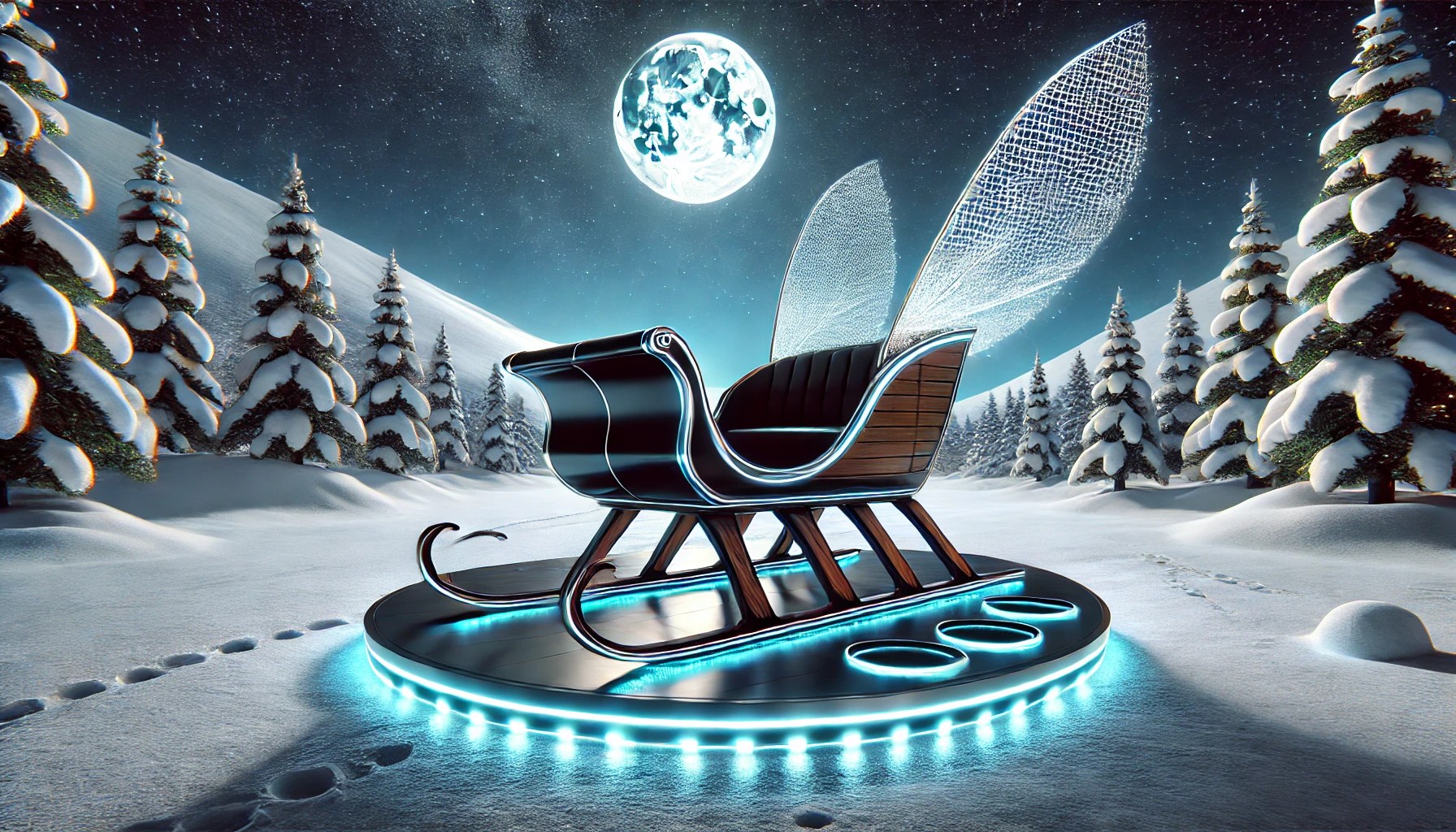
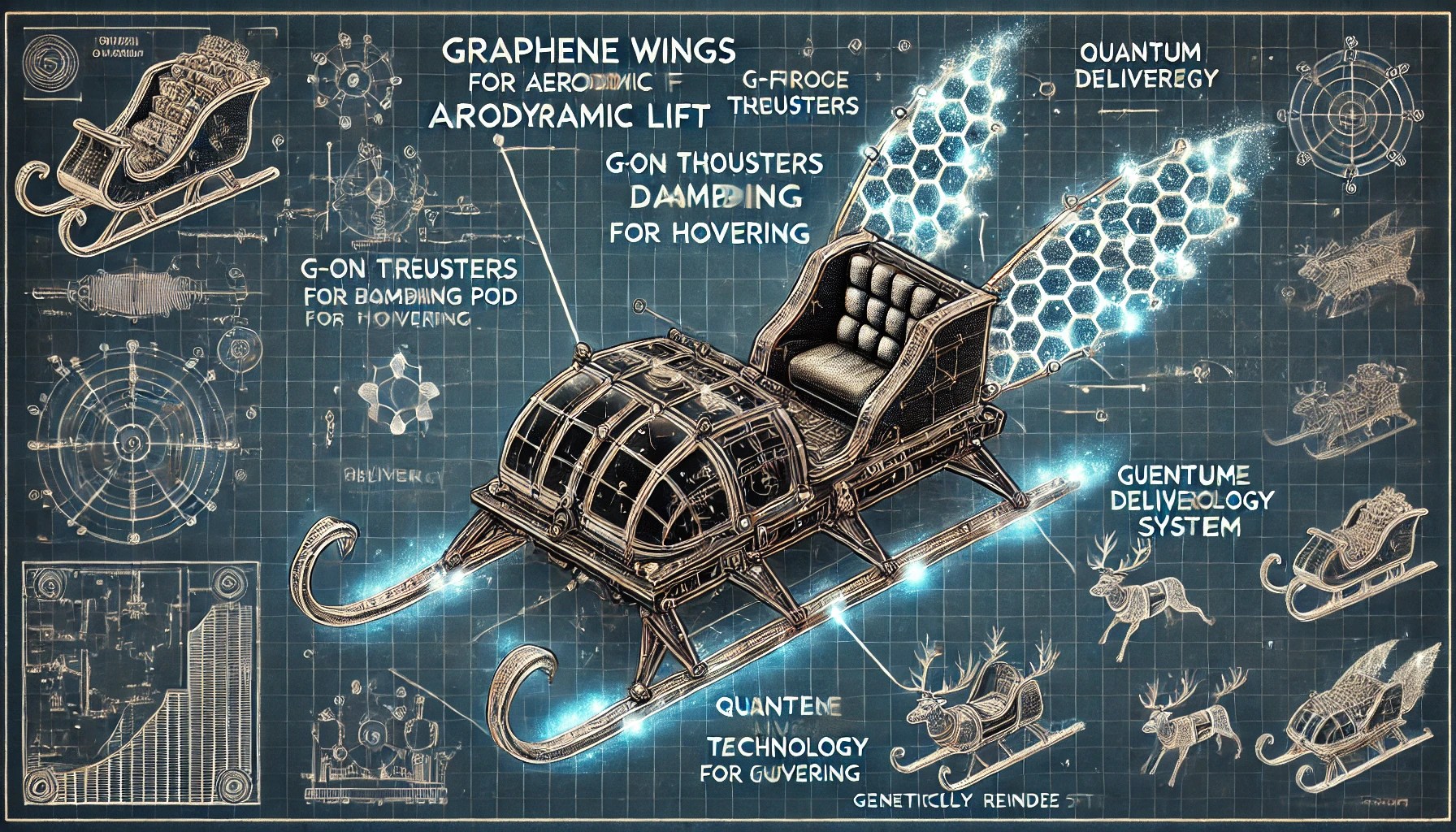
Even with propulsion sorted, Santa needs to get his sleigh off the ground and keep it airborne. Here’s where things get interesting. Traditional lift—like what airplanes use—requires wings. Santa could upgrade to a hybrid sleigh-plane design, with retractable wings made of graphene. Graphene is 200 times stronger than steel yet incredibly light, making it ideal for a sleigh that needs to be both nimble and durable.
However, wings alone won’t solve everything. The sleigh would need to maintain stability in turbulence, and let’s not forget the vertical takeoffs and landings required for all those rooftop stops. Enter electromagnetic levitation. Maglev trains, like Japan’s L0 Series, use powerful magnets to lift and propel themselves forward with near-zero friction. By combining maglev with modern drone technology, Santa’s sleigh could hover gracefully while maneuvering in tight urban environments.
In a real-world parallel, Boeing has experimented with “blended wing body” designs that increase lift while reducing drag. Combine that with Hyperloop maglev principles, and Santa’s sleigh might start to look less like a traditional sled and more like a futuristic hovercraft.
Step 3: Reindeer Reimagined – A Bioengineer’s Dream
Reindeer are central to Santa’s image, so we might not be able simply to swap them out for jet engines after all. Luckily, science has come a long way toward some essential upgrades.
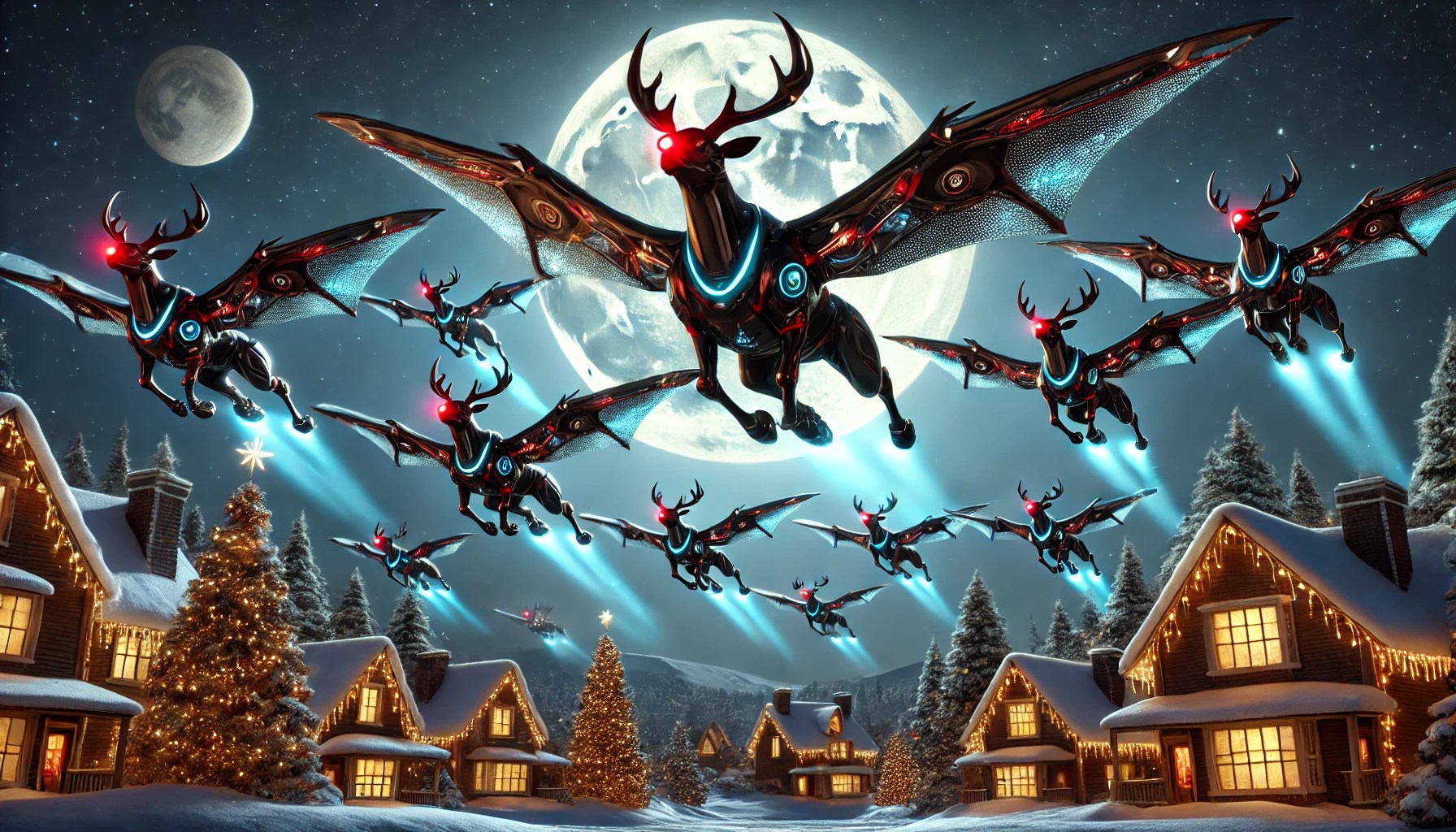
Let’s start with flight. By borrowing from nature, genetic engineers might enhance reindeer with wings inspired by bats or albatrosses. Bats use a combination of lightweight bone structures and elastic skin to achieve lift, while albatrosses are masters of energy-efficient gliding. CRISPR, the gene-editing tool, might let us splice in these traits to create Reindeer 2.0.
And what about Rudolph’s glowing nose? Bioluminescence exists in nature, from fireflies to deep-sea anglerfish. By adding luciferin—the molecule responsible for bioluminescent glow—scientists could give Rudolph’s nose the perfect red glow for foggy Christmas Eves.
The Biotech company Ginkgo Bioworks has already experimented with creating glowing plants. Scaling this up to a reindeer herd would be challenging but theoretically not impossible. Who wouldn’t want to see a bioluminescent Dasher leading the charge?
Step 4: Delivery Logistics – Quantum Santa
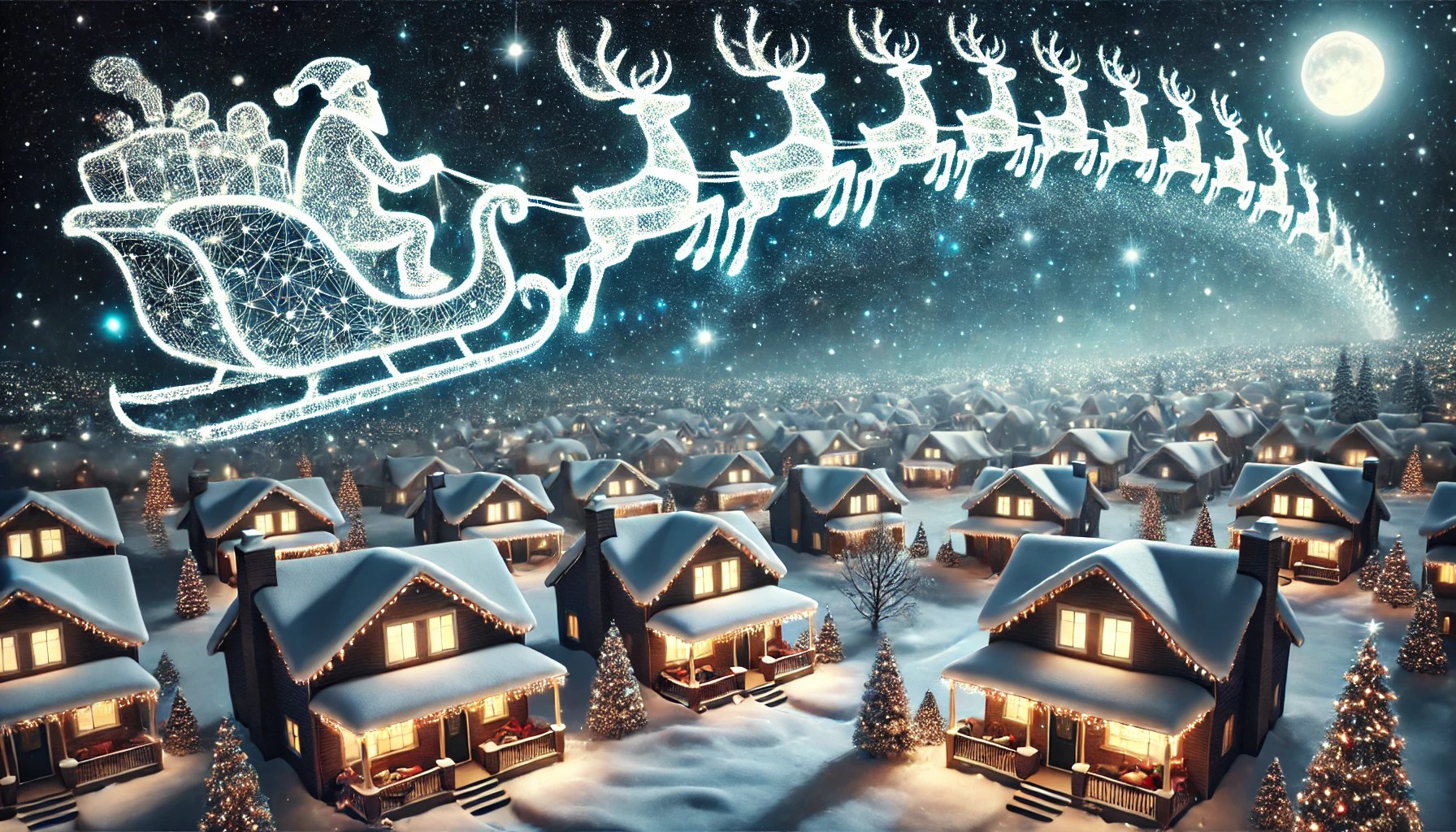
Santa’s real magic lies not in flying but in delivering presents to nearly 2 billion children in a single night. To put this in perspective, Santa would need to visit about 390,000 homes per minute—6,500 homes per second. No known delivery system, not even Amazon Prime, could achieve this.
Here’s where quantum mechanics enters the picture. Quantum superposition allows particles to exist in multiple states simultaneously. If Santa’s sleigh could harness this principle, he could theoretically exist in millions of locations at once, delivering presents in parallel. Alternatively, wormholes—shortcuts through space-time—might enable Santa to hop instantaneously between locations, consume all those milk and cookie plates without even getting sick.
In the real-world, CERN’s Large Hadron Collider has explored quantum entanglement and the existence of theoretical particles. We’re still far from wormhole technology, but the concept of instantaneously traversing vast distances is no longer purely science fiction.
Step 5: Surviving the Journey – Heat, Speed, and Comfort
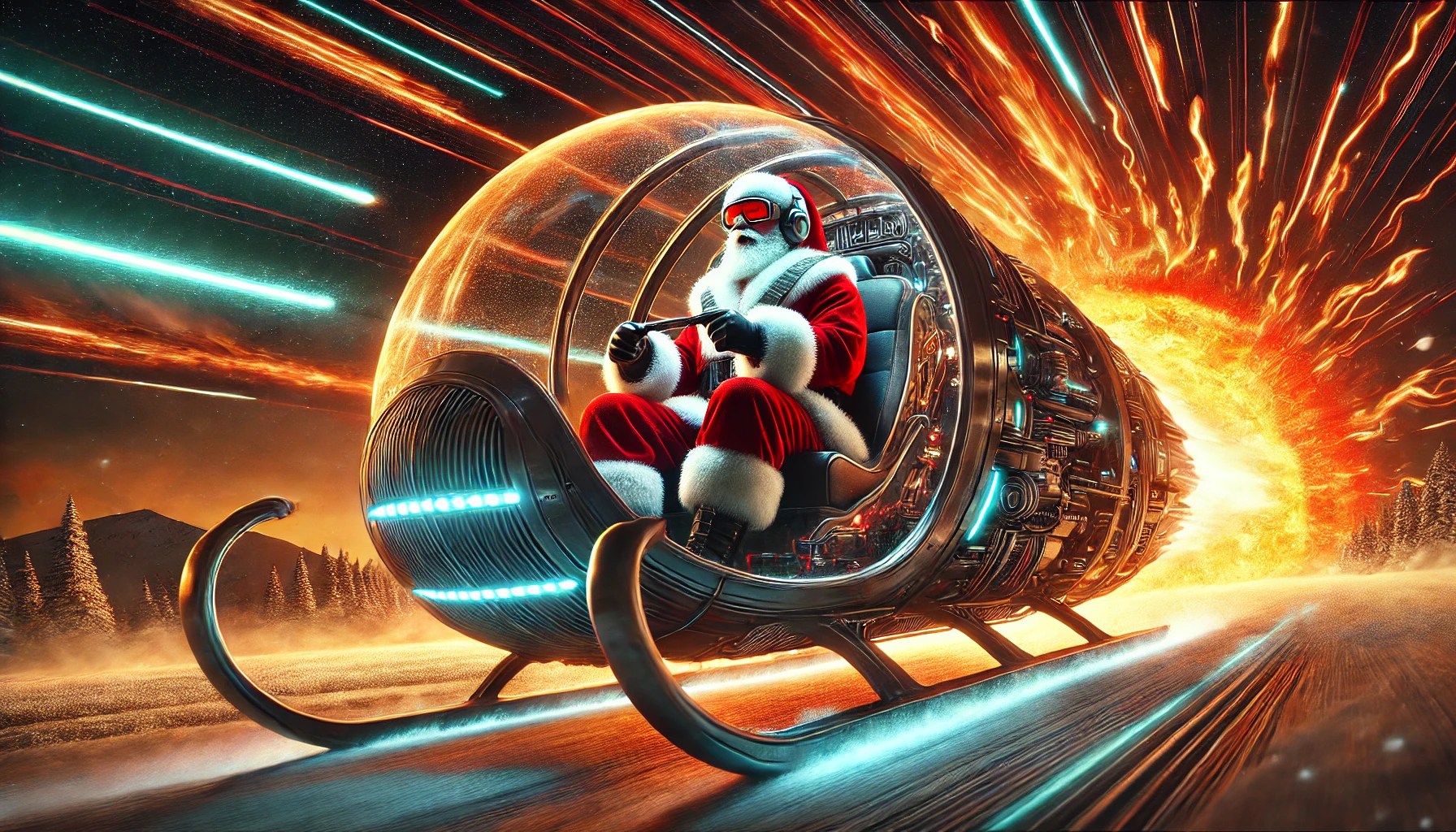
Until we invent a warp drive for Chris Kringle, he has to travel at hypersonic speeds, and that presents its own set of challenges. At rates exceeding Mach 5, the sleigh would encounter intense heat from air friction. To survive this, Santa would need a heat shield similar to those used on spacecraft during reentry. NASA’s Orion spacecraft uses an advanced material called AVCOAT to deflect heat—Santa could line his sleigh with the same stuff.
And what about Santa himself? To avoid being crushed by G-forces during high-speed turns, the sleigh would need advanced dampening systems. Modern fighter jets use specially designed suits to keep pilots conscious at high Gs. A sleigh equipped with a G-force dampening pod could keep Santa safe and snug while zipping around at supersonic speeds.
Back to NASA’S Orion spacecraft. It incorporates advanced heat shields and life-support systems, ideal for enduring extreme conditions during reentry. A similar design could keep Santa from overheating—or spinning into oblivion.
Is It Really Possible?
So, could we get Santa airborne with modern science? Theoretically, yes—but not without some significant breakthroughs in quantum mechanics, bioengineering, and materials science. While St. Nick’s sleigh may remain magical for now, the technology we’ve explored here is already reshaping our world. From maglev trains to ion thrusters, the boundary between magic and science is thinner than ever.
This holiday season, as you listen for that mystical clatter of reindeer hooves on the roof, take a moment to marvel at the science that allows so much to happen in the very real, not-so-mystical world. Who knows? One day, the next great invention might come from such an unexpected place.
Happy holidays—and keep dreaming.
 ERIC DORFMAN
Leave a comment