

Imagine strolling under the lush, deep green canopy of the Amazon Rainforest. You are surrounded by a vibrant mix of bird calls – macaws, hoatzins, the musician wren. Then, one voice cuts through the symphony with the power of a rock concert. Somewhere between a piercing whistle and a rusty gate, it reverberates through the canopy, haunting and unmistakable. Meet the White Bellbird Procnias albus, brilliantly white with a grayish wattle alternately drooping and flopping around its beak. Its call can reach an astonishing 125 decibels, rivaling a lot of sounds you don’t want to get too close to:
- Chainsaw: Typically, chainsaws operate at around 110-120 dB.
- Rock Concert: Loud rock concerts often reach levels between 110-120 dB. (KISS concerts have reached up to 139dB, but who’s counting.)
- Car Horn at 3 Feet: A car horn at close range can produce about 110-115 dB.
- Thunderclap: Thunderclaps can vary widely but can reach around 120 dB close to the source.
- Jet Engine at 100 Feet: When an airplane is taking off and you are relatively close, the sound level can be around 120 dB.
- Jill Drake. The loudest human voice ever recorded belongs to classroom assistant Jill Drake from the UK, who reached a scream level of 129 decibels during a Halloween event in London in October 2000. Go Jill.
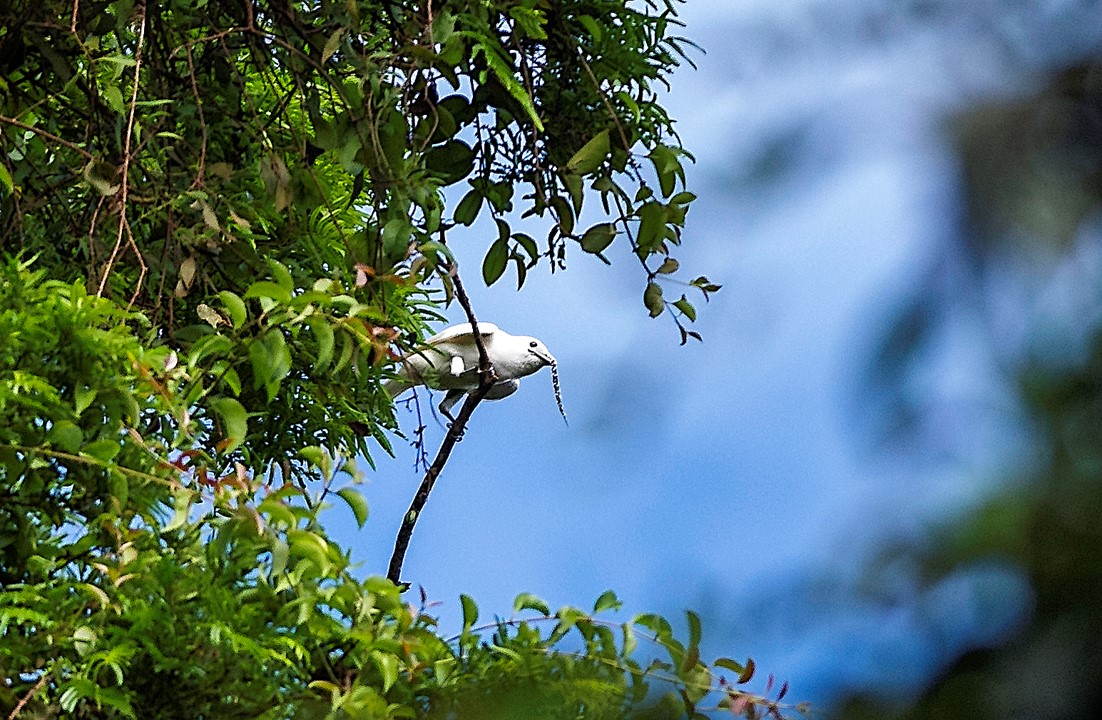
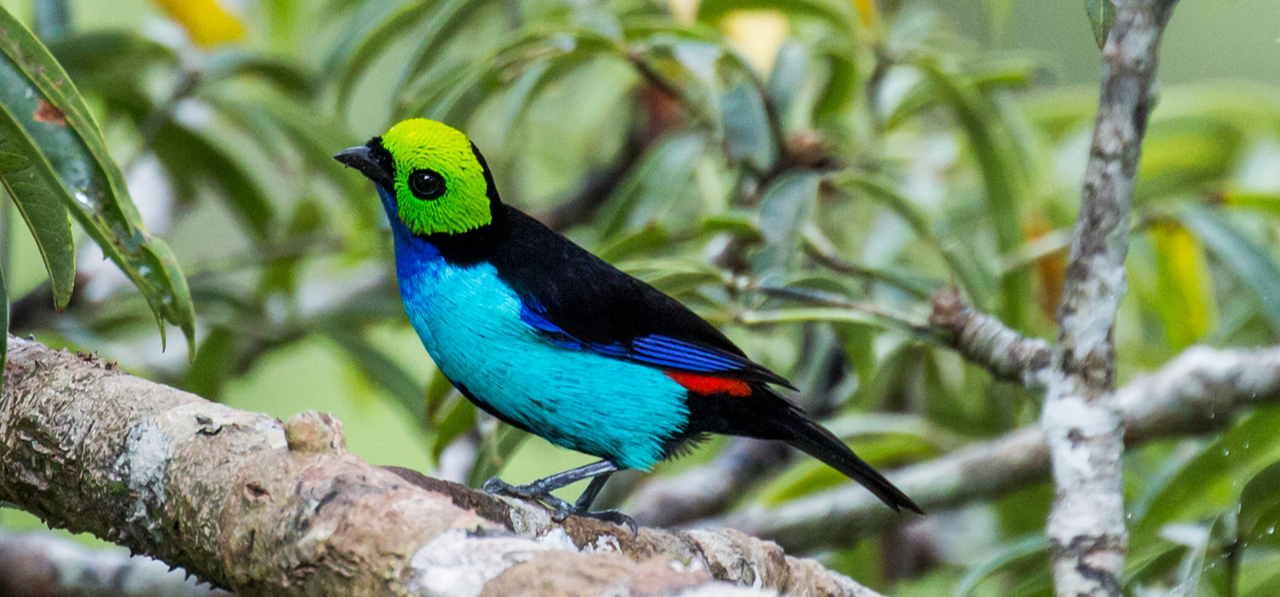
Listen to the call of the White Bellbird here. Not bad for a bird that weighs between 180 to 250 grams (approximately 6.3 to 8.8 ounces). Males perch high in the canopy, projecting voices as far as possible to attract potential mates. Despite being bright white, contrasting against a blue background above, amongst the foliage, they blend in well with sunlit patches within the canopy. And being able to communicate effectively while being visually inconspicuous is a great strategy when the canopy abounds with predators, like the Harpy Eagle Harpia harpyja and the Margay Leopardus wiedii. This represents a different evolutionary path from many other more colorful tropical species that rely on visual as well as vocal displays. For instance, the Paradise Tanager Tangara chilensis, a small bird of striking green, blue, turquoise, and red against a field black, produces its melodious calls typically in the range of 60-70 decibels.
Ecological Relationships
Information on the diet of the White Bellbird has is relatively scant. Eating exclusively fruit, the White Bellbird plays an important ecological role in seed dispersal. Many plant species rely on their seeds passing through the gut of a bird to remove a protective coating and, in some cases, like mistletoe, birds and have evolved a complex co-evolutionary relationship, of benefit to both. Whether this tight-knit relationship exists for the Bellbird, or whether it’s a generalist, consuming anything available, hasn’t been recorded. (Of course, if you have a PhD on this topic, let me know.)

The sparse information on food habits is, however, more than made up for by a wealth of information on their reproductive behavior, which includes that prodigious call. It would be easy to think that the feature evolved simply as an adaptation to attracting mates in the dense rainforest canopy. White Bellbirds have a lek mating system, in which males gather in specific areas to perform their calls, creating a competitive environment that allows the dull, green (and well-camouflaged) females to choose the best mate based on vocal performance. This behavior underscores the importance of acoustic signals in their reproductive strategy. From an evolutionary standpoint, males have gone down a path of advertising their prowess with a spectacular call, rather than spectacular plumage, differing from so many other tropical birds.
Organized Chaos
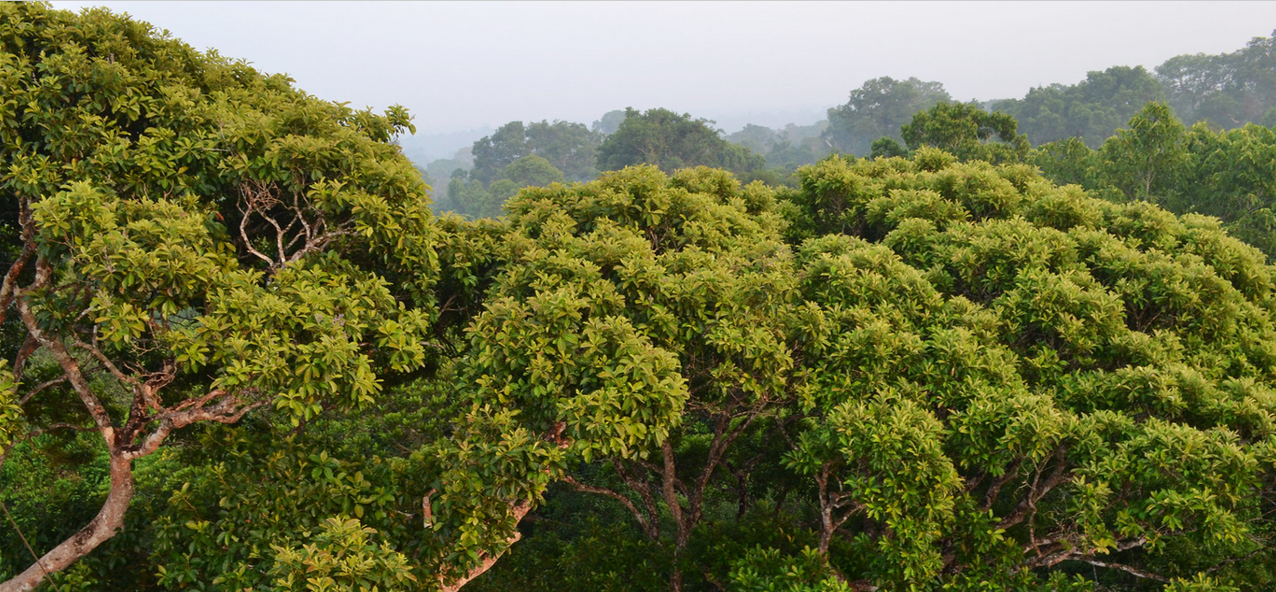
But the whole picture is more complicated. Assemblages of birds compete for space in the vocal spectrum, each finding their own spot along the bandwidth, like passengers jostling on a crowded subway. Which bird fits where along this gradient, is usually thought to parse out by size. “Allometry” refers to the study of the relationship between the size of an organism and the shape, anatomy, physiology, or behavior of its parts. In the context of Amazonian bird assemblages, allometry is used to understand how the size of a bird influences its vocal apparatus and, consequently, the acoustic signals it produces. Larger birds typically have larger vocal organs, which can produce lower frequency sounds, while smaller birds have smaller vocal organs that produce higher frequency sounds.
Researchers based in Brazil and the US,(Torres et al. 2020) examined whether the acoustic parameters of bird songs in an Amazonian bird community followed general allometric rules. They created an allometric model based on the vocal patterns of larger species to predict the expected frequencies for smaller species. Their study found that smaller birds produced frequencies that were higher than predicted by allometry alone, suggesting that factors such as competition for acoustic space also play a significant role in shaping the vocal signals of these birds.
So, while the White Bellbird’s vocal strength does ensure that its calls can penetrate through the thick foliage, reaching potential mates and rivals a long way off, they are also working hard to be heard at all through the din of other calls. The potential for doing this is certainly aided by being loud. Now, all of this comes at an energetic cost. It also makes them more vulnerable to detection by predators like monkeys (Neal, 2009). But the highest cost, surprisingly, is to the recipients to these calls – the females.

A Punishing Courtship
Female White Bellbirds and other members of Family Cotingidae (which includes other very loud relatives, like the Screaming Piah Lipaugus vociferans) are listening to males’ calls at very short range. White Bellbird females listen to males as close as four meters. At this distance, they are experiencing potentially damaging sound coming from their prospective mates. Presumably the risk of going deaf is compensated by the benefits in distinguishing between the quality of different males and, arguably, the competitive ability of her offspring. While they seem to have strategies to minimize exposure, like moving around while they make their choice (Podos and Cohn-Haft, 2019), it could still be argued that females choosing the loudest males has created a snowball effect in a process called ‘runaway sexual selection.’
Conservation
The White Bellbird is an icon of the Amazonian rainforest. Its call is an integral part of the environment’s rich acoustic landscape. But the rainforest, with all its wonders, is facing unprecedented threats. Deforestation for agriculture, logging, and infrastructure development is rapidly shrinking the habitat for this species, along with a vast array of others. Fortunately, the White Bellbird is still listed by the IUCN as “least concern” and, while their are no conservation efforts specifically aimed at them, the Conservation International, the US Fish and Wildlife Service, and BirdLife International, and others, all have efforts to conserve habitat that is home to the species. The loss of these forests spells the collapse of an intricate web of life that depends on this environment. Conservation is rarely just about saving individual species but about maintaining the health and integrity of entire ecosystems. The Amazon rainforest, with its myriad interdependent species, is a prime example of this interconnectedness.
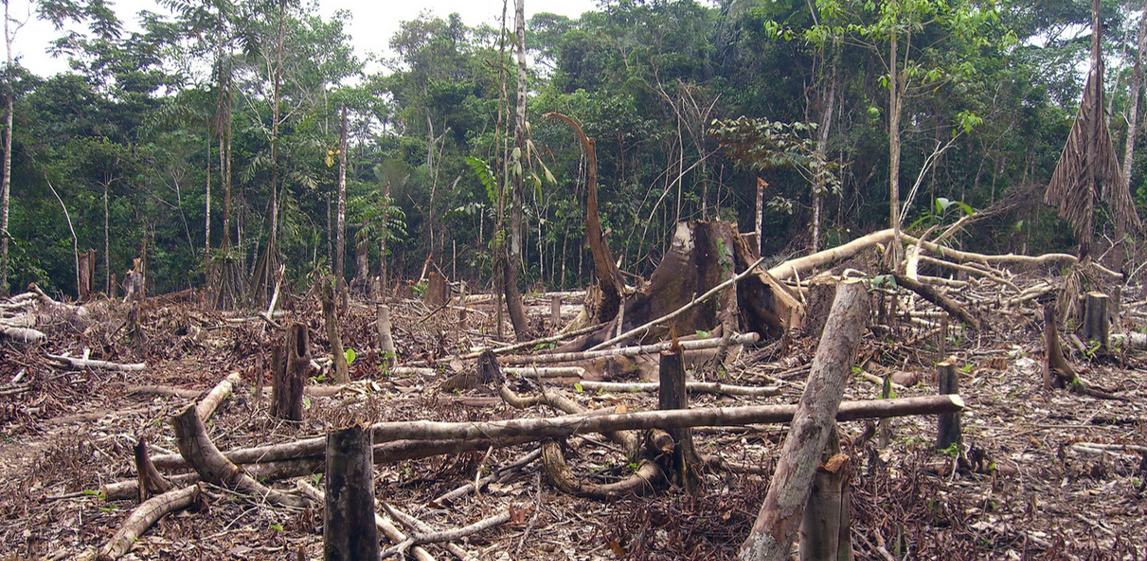
For those who might never trek through the Amazon, the story of the White Bellbird offers an insight the intricate and often surprising wonders of the natural world, and small taste of the miraculous diversity of this environment. I’ve written recently about the decline of the Amazon. In the roughly eight hours it took me to research and write this post, about 205 acres of rainforest were lost (that’s about 2.25 million acres annually, if you were wondering). I could write a whole post on what we all can do to help the situation in the Amazon (assuming you’re not a politician in Brasília). Maybe I will. But for now, I’m thinking about the sustainability of consumption of rainforest products like coffee, using recycled paper, contributing to reforestation efforts and, well, writing this post.
References
- Neal, O. 2009. Responses to the audio broadcasts of predator vocalizations by eight sympatric primates in Suriname, South America. Kent State University ProQuest Dissertations & Theses, 1468473.
- Nemeth E. 2004. Measuring the sound pressure level of the song of the Screaming Piha, Lipaugus vociferans: One of the loudest birds in the world?. Bioacoustics. 14: 225-228.
- Podos J. and Cohn-Haft, M., 2019. Extremely loud mating songs at close range in white bellbirds. Current Biology 29, R1055–R1069.
- Torres, I. M. D., Barreiros, M. H. M., de Araújo, C. B. 2020. The acoustic ecology of an Amazonian bird assemblage: the role of allometry, competition and environmental filtering in the acoustic structure. Ibis. Volume162, Issue3.
- Whittaker, A. 1996. Notes on feeding behaviour, diet and anting of some cotingas. Bulletin of The British Ornithologists’ Club 116:58-62.
Cover Photo: Medina, 2023
 ERIC DORFMAN
Leave a comment