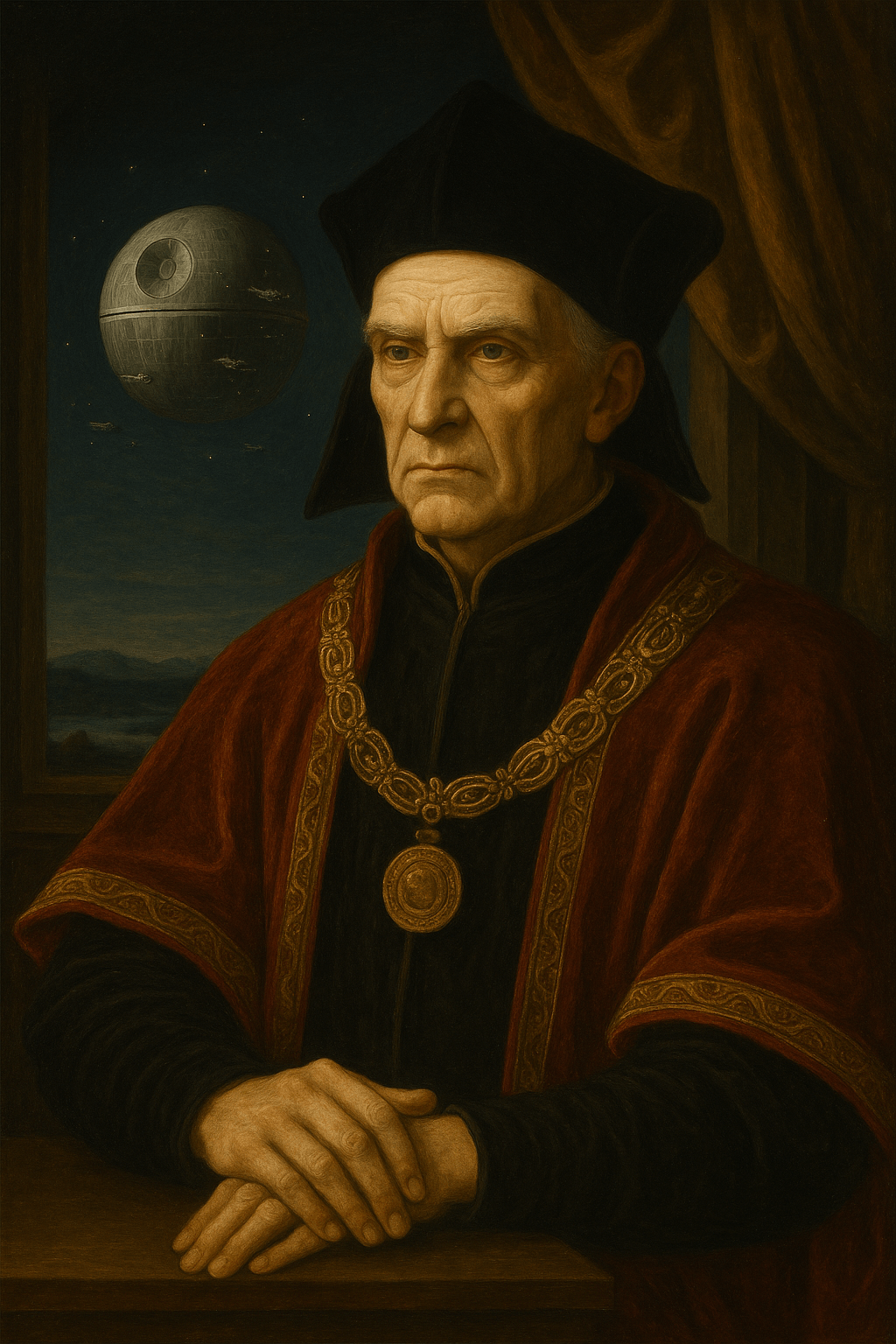
Part of the ongoing Bad Leaders series examining the psychology and systems of power that destroy rather than sustain.
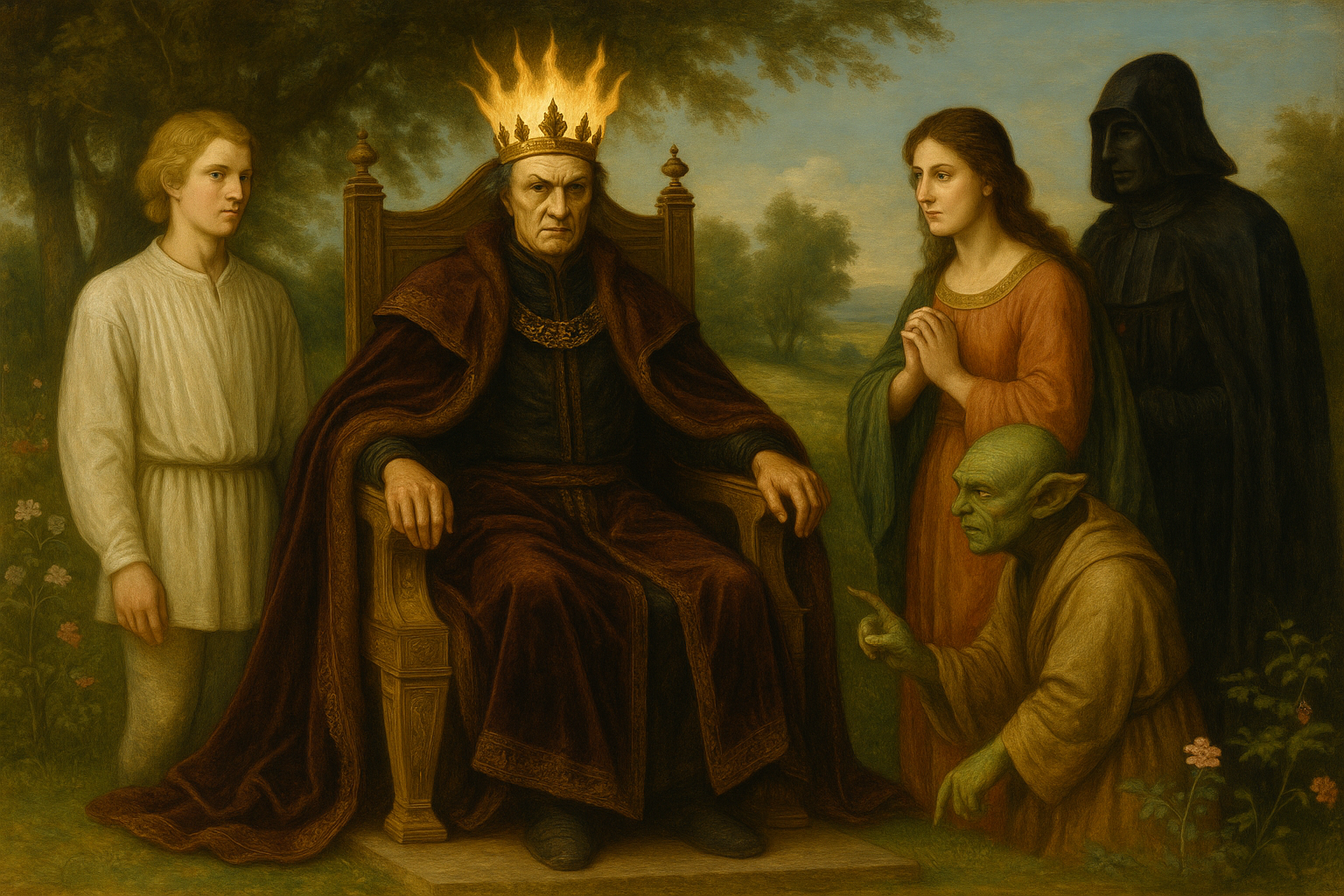
In my occasional series on bad leaders, I have covered Henry VIII’s brain injury, Caligula’s autoimmune issues, and Vlad’s sheer ruthlessness. I now bring you a new facet of poor leadership: narcissism. Leadership failures take many forms, some bureaucratic, some spectacular. Emperor Sheev Palpatine’s was both. His reign over the Galactic Empire offers a strikingly clear example of what happens when a narcissist achieves absolute power and constructs an organization that reflects only himself. Even the Death Star, his signature achievement, can be read as a psychological artifact: a glittering monument to insecurity, designed to obliterate anything that threatened his self-image.
Palpatine’s ascent was, on the surface, a triumph of political acumen. Rising from Naboo’s senatorial class, he played both sides of every conflict, cultivating an image of calm reason while secretly manufacturing the very crises he promised to solve. His genius lay in his ability to make others feel essential to his vision while ensuring they remained utterly expendable. This technique, common among narcissistic leaders, turns subordinates into willing instruments, each convinced they possess unique insight into the leader’s mind.

The pattern is especially visible in his interactions with the Jedi. He dismantled their centuries-old order not merely through military power, but through psychological warfare – flattery, gaslighting, and public framing. When that failed, he turned to individual manipulation. Luke Skywalker, the young rebel he sought to convert, was not a strategic necessity but a narcissistic fixation: the fantasy that even one’s greatest threat secretly admires and longs to emulate you. In Palpatine’s mind, conquest was never enough. Validation was the true prize.
Like many historical autocrats, Palpatine equated domination with competence. His suppression of the Senate, centralization of the fleet, and obsession with loyalty all stemmed from the same delusions of grandeur: that unity meant uniformity. He eliminated dissent, dismantled transparency, and replaced institutions with personal allegiance. The result was an empire that appeared stable, yet was catastrophically fragile – the administrative equivalent of building a massive battle station with a single critical fault line.
Palpatine’s leadership was defined by a need to control every variable. He mistook obedience for order and silence for peace. This created a feedback vacuum so complete that failure became invisible until it was fatal. Those around him learned to survive through flattery, never honesty—a culture that guarantees collapse once the leader’s whims turn lethal.
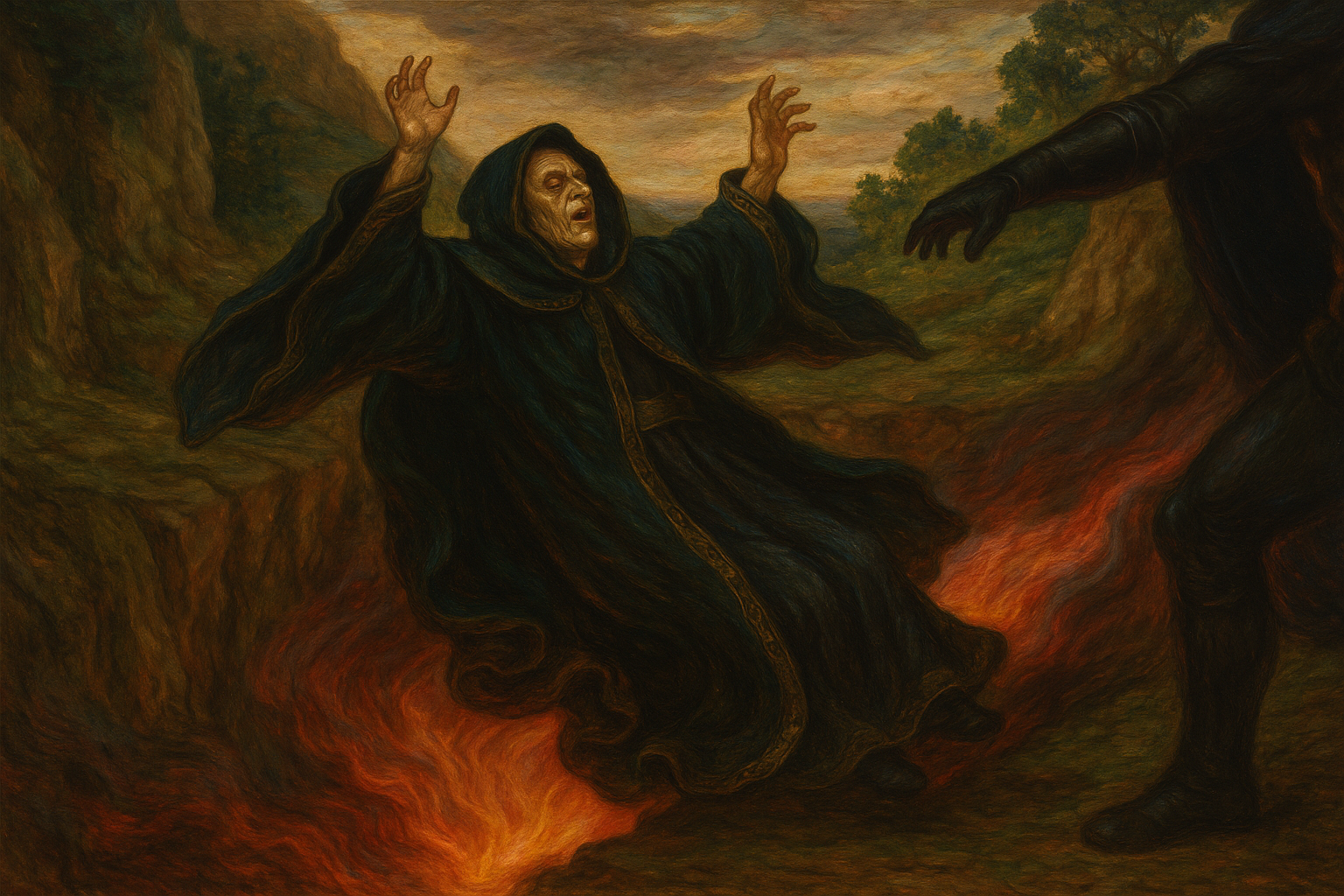
His demise was not brought about by external forces alone but by the psychological implosion common to narcissistic regimes. The Emperor’s conviction of invulnerability blinded him to the autonomy of those he had subjugated. In the end, it was not rebellion that destroyed him but disillusionment. The same pawns he believed adored him: his apprentices, his soldiers, even his empire, ceased to believe.
In leadership terms, Palpatine’s Empire was not a government but a mirror. Every decision reflected one man’s ego, and every success existed to confirm his divinity. Once the reflection broke, the galaxy no longer had an Emperor, just an old man falling through space, undone by the vacuum he created around himself.
Next in the series: Ivan the Terrible, whose paranoia and divine self-image turned an empire into a haunted court.
This essay is an homage to the Star Wars Universe and the study of leadership through the lens of storytelling. All characters and events described are entirely fictional, and any resemblance to real persons, living, dead, or galactic, is purely coincidental.
All images created with AI (obviously).
 ERIC DORFMAN
Donald Palpatine came up Trumps with the Chumps… for a while. Soon he will be pushing up daffodils.