
The Legend and the Man
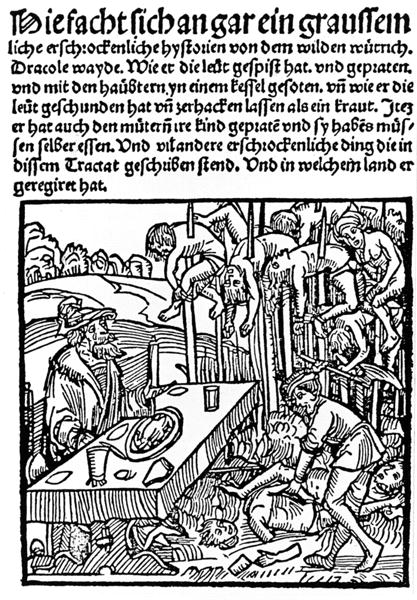
Vlad III, known as Vlad the Impaler (1448-1477), has long been entangled with the legend of Count Dracula. Bram Stoker’s vampire borrows his name and homeland, but the real Vlad was no immortal creature of the night—his terror was all too human. While history paints him as a ruthless warlord who skewered thousands on wooden stakes, a closer look suggests that much of his reputation was crafted by political enemies and amplified by early printing propaganda. The real Vlad III was a complex figure—a warrior-prince who fought to protect his land from invasion, a ruler who wielded fear as a weapon, and, perhaps most importantly, a man whose legacy was shaped as much by his enemies as by his actions.
The Smear Campaign That Made a Monster
The stories of Vlad’s brutality—his mass impalements, his supposed blood-drinking, his penchant for cruelty—primarily come from German and Ottoman sources, both of whom had vested interests in making him appear monstrous. The Saxons of Transylvania, with whom Vlad frequently clashed over trade rights, produced early pamphlets and books detailing his horrors, many of which were printed during his lifetime. The Ottoman Empire, against whom Vlad fought bloody wars, also contributed to the demonization of his name, portraying him as a tyrant who defied their rule with grotesque savagery.
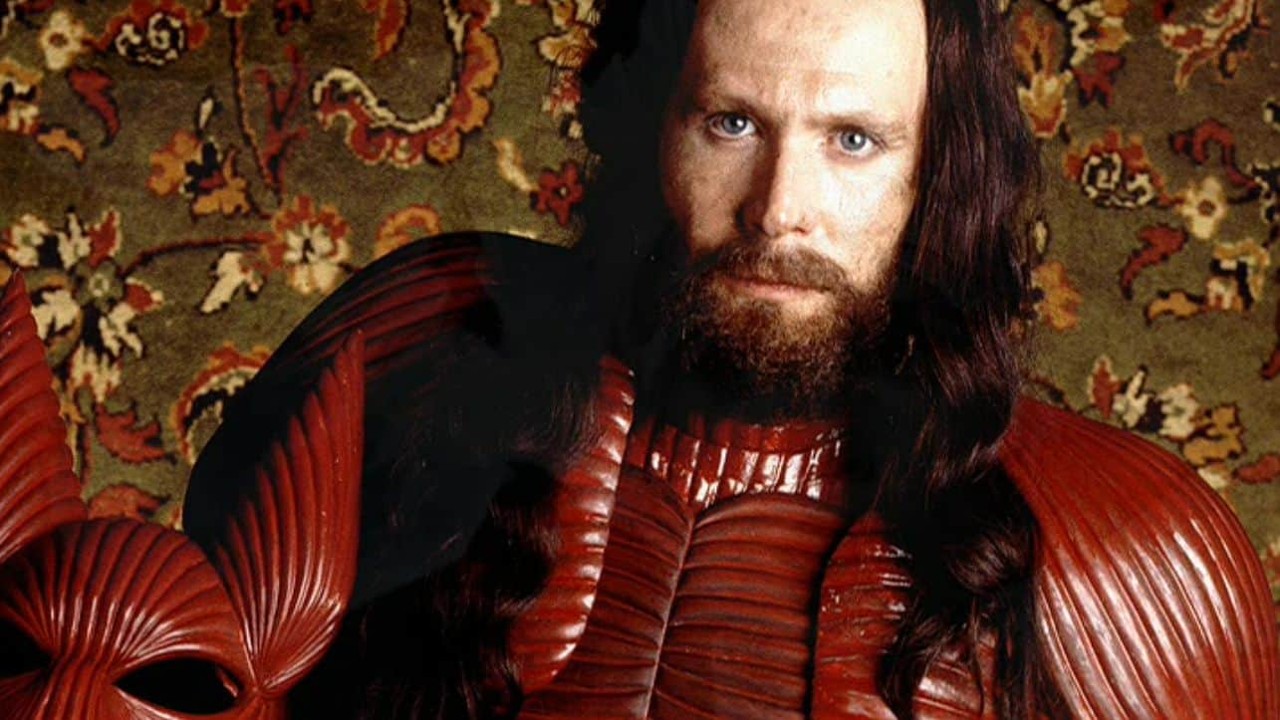
Yet, contemporary Romanian sources tell a different story. While they do not ignore his harsh punishments, they frame him as a protector—a ruler whose, ruthlessness was necessary to hold back the encroaching Ottoman threat. Even today, he is remembered in Romania not as a sadist, but as a national hero, a man who fought for his people in an era when survival required more than diplomacy.
Fear as a Political Weapon
If Vlad’s reign was not defined by mindless bloodlust, what was it? The answer lies in the science of fear. Vlad III understood what modern psychology confirms: fear is a powerful tool for maintaining control. His use of impalement was not just about punishment—it was a form of psychological warfare. Accounts of entire fields filled with impaled corpses were likely exaggerated, but the point remains: his enemies feared him, and that fear alone may have saved his throne.
Modern research into fear conditioning shows that extreme punishments can create long-term compliance. Vlad may not have studied neuroscience, but he instinctively grasped that a ruler who is feared is far less likely to be challenged. He used terror strategically, not indiscriminately, ensuring that his message of dominance was clear, unforgettable, and self-perpetuating.
Blood, Vampires, and Science
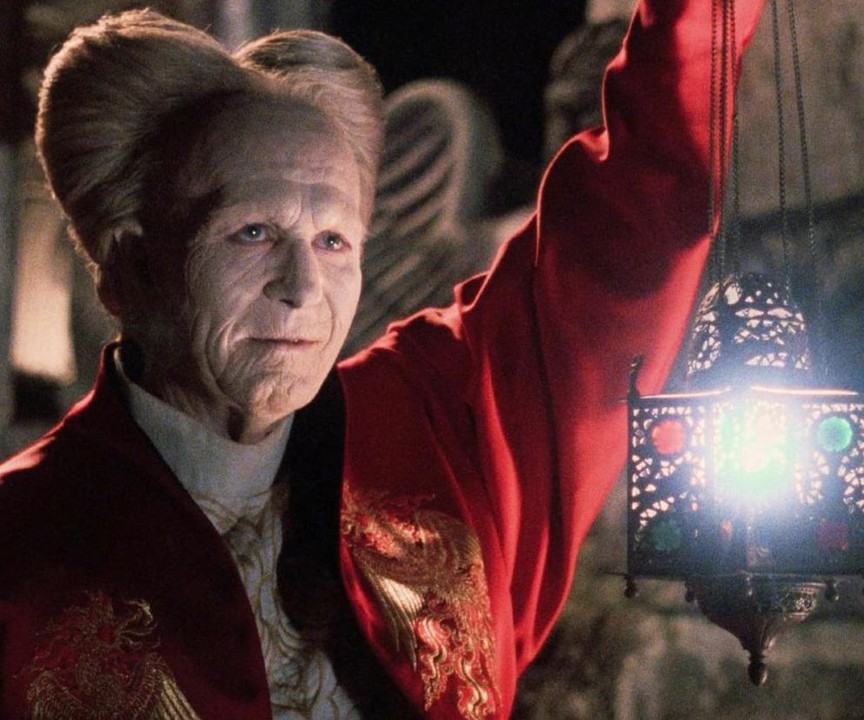
One of the most persistent myths about Vlad III is that he drank the blood of his enemies. There is no credible historical evidence for this, but the science of vampirism provides fascinating insight into why this story took hold. Conditions such as porphyria, which can cause sensitivity to sunlight and, in extreme cases, a craving for blood’s iron content, may have influenced vampire folklore. Likewise, rabies, a disease that can cause aggression, sensitivity to light, and even a tendency to bite, may have contributed to the idea of blood-drinking predators lurking in the dark.
If we strip away the propaganda and gothic embellishments, what remains? A ruler who fought a brutal, high-stakes game of survival. He was neither a saint nor an indiscriminate sadist; he was a man of his time, using the weapons at his disposal—fear, brutality, and reputation—to defend his land.
Modern forensic science, if ever applied to Vlad’s remains, could tell us more about his physical health—was he suffering from chronic disease? Had his body been worn down by battle? Some have speculated that he died from wounds, poisoning, or even an assassination. His final resting place remains a mystery, fueling the sense that Vlad III exists as much in legend as in history.
From Ruler to Horror Icon: The Science of Our Fascination
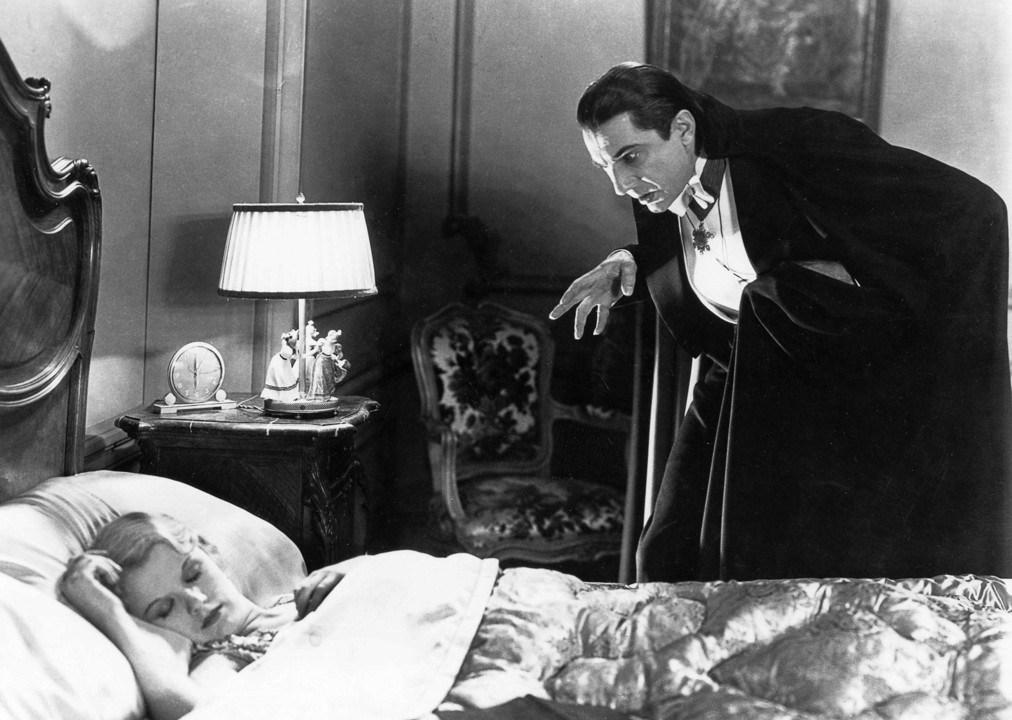
Yet, if Bram Stoker had not chosen the name Dracula, would the world outside Romania even remember Vlad III? Without the vampire legend, Vlad might have remained an obscure Renaissance warlord, another brutal ruler in a sea of forgotten tyrants. Instead, he has become immortal—not through his deeds, but through fear itself. The human brain is wired to remember horror; evolutionary psychology suggests that we fixate on terrifying figures because survival once depended on knowing what to fear.
Hollywood amplified this effect, turning Vlad into something larger than life. Science tells us that stories of terror and the supernatural tap into deep-seated primal fears, making them more memorable and enduring than mere historical facts. Vlad III’s real-life terror was instrumental, calculated—designed to keep his enemies at bay. But his legendary terror? That was the work of fiction, shaped by cultural fascination with fear, folklore, and the macabre.
Vlad III, Caligula, and Henry VIII: Who Controls the Narrative?
Vlad III is the third, and perhaps the last, in a series in which I consider the science behind brutal leadership. Vlad’s legacy, much like that of Caligula and Henry VIII, is a testament to the power of storytelling. All three were rulers whose reputations were shaped as much by political necessity and historical bias as by their actual deeds. Caligula’s excesses may have been exaggerated by hostile Roman historians eager to discredit his reign. Henry VIII, despite his aggression, managed to craft a legacy as a defining monarch who reshaped England. And Vlad III? His name might have faded into obscurity had it not been borrowed for a vampire legend that transformed him into a global icon of terror.
What ties them together is the weaponization of fear—whether in their lifetimes or after. Vlad used fear deliberately to maintain power, creating a reputation so fearsome that even his enemies could not ignore it. Caligula’s paranoia led to cruelty that spiraled into legend. Henry VIII’s calculated purges ensured his authority remained unchallenged. Yet of the three, Vlad is perhaps the only one whose reputation was largely shaped by his enemies, rather than by his own actions.
Villain, Hero, or Just a Man?
So, was Vlad III a madman, a brilliant strategist, or a victim of historical distortion? Perhaps he was all three. His reign, built on blood and fear, continues to haunt history—not just because of what he did, but because of how his story was told. Dracula may be a myth, but the real Vlad? He was something even more terrifying: a man who understood, better than most, that survival in his world demanded not just strength, but the ability to make others believe in the legend of his own cruelty.
Vlad III’s legacy is, in the end, a testament to the power of storytelling. In the West, he became Dracula—a creature of nightmare, a sadistic monster who drank the blood of his enemies. In Romania, he remains a symbol of resistance, a ruler who did what was necessary to keep his people free. The truth is, as truths often are, somewhere in between.

Vampires in Nature
Some of Vlad’s glamor could be that vampirism is just plain fascinating. In nature, what they lack in stylish Romanian accents, they make up for in diversity: insects and bats (of course), but also some worms, fish and birds practice hematophagy. I’ve written about them in a previous post, which you can read here.
 ERIC DORFMAN
Leave a comment