
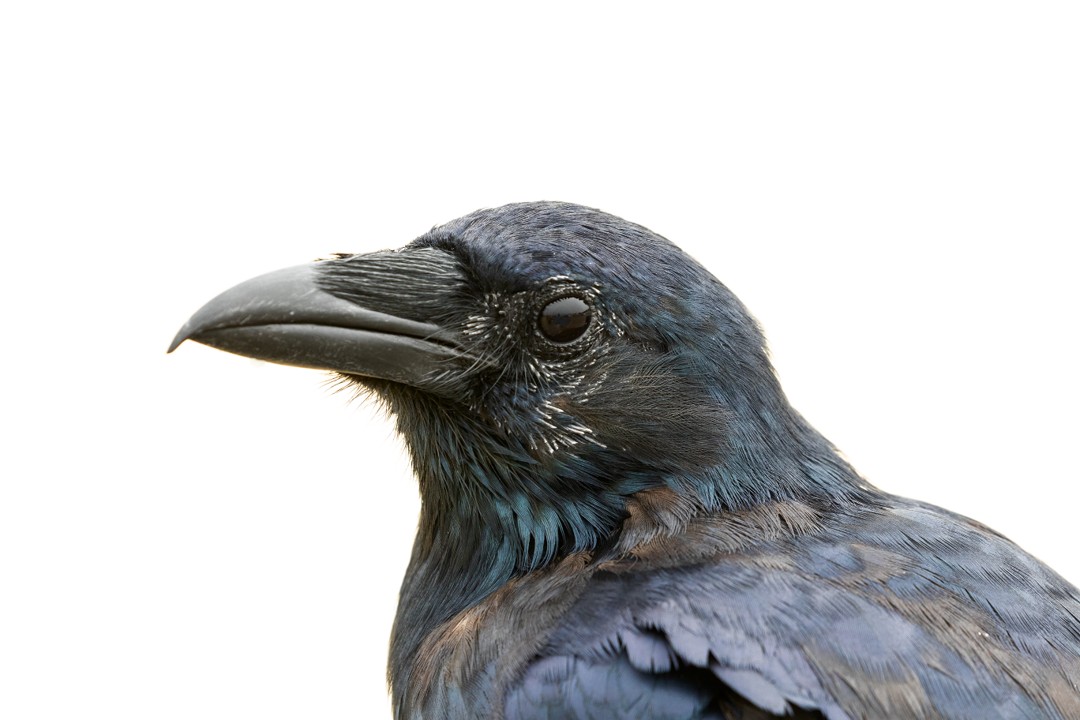
Imagine a quiet observational chamber: a puzzle box, a simple hooked tool, and a morsel of food placed just beyond reach. A young child examines the scene, puzzled, perhaps curious, perhaps distracted. A crow enters the same space, studies the problem, selects the tool and, with deliberation, retrieves the reward. The image seems counterintuitive. How could a bird, devoid of a neocortex and weighing a few hundred grams, outperform a human child in a task we might consider foundational to our species’ evolutionary legacy?
And yet, corvids – members of the crow family, including ravens, magpies, and jays – consistently demonstrate cognitive capacities that rival, and in some domains exceed, those of human toddlers. Tool use, foresight, social inference, episodic memory, numerical abstraction—these are not the guarded traits of Homo sapiens alone. They appear, strikingly, in creatures who predate primates by hundreds of millions of years, and whose brains are structurally, but not functionally, alien to our own.
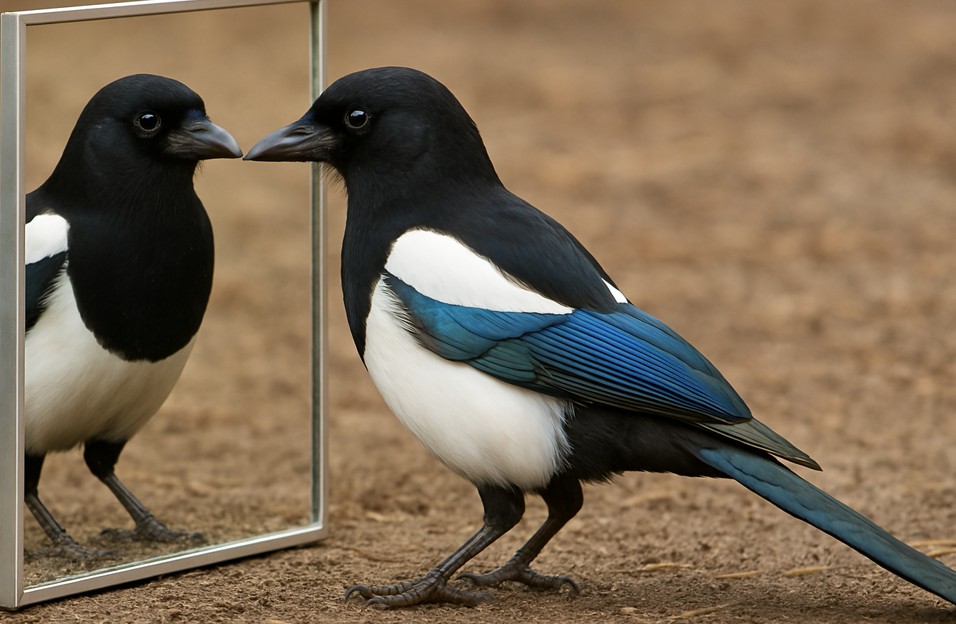
Take, for instance, the question of self-recognition. In a landmark 2005 study published in Current Biology, magpies were shown to respond to their own reflection in a mirror by attempting to remove colored marks placed on parts of their bodies only visible through that mirror. This capacity—to distinguish oneself from others—has long been interpreted as a proxy for self-awareness. It is reliably demonstrated in only a handful of mammals, including great apes, dolphins, and elephants. Most children do not pass the mirror test until around 18 to 24 months of age. The magpie’s success complicates not only our anthropocentric assumptions about intelligence, but the very neurological prerequisites we once believed necessary to support it.
Tool use among corvids is an even more cogent example. The New Caledonian crow, in particular, has emerged as a key species for studying innovation in non-human animals. These birds not only use tools—they make them, often modifying twigs into hooks or combining multiple elements to solve novel problems. Jacobs (2015) and Jelbert et al. (2016) documented instances of causal reasoning and foresight in corvid tool behavior that mirror, in outline if not origin, the cognitive processes seen in young children. The difference lies not in capacity but in the route by which it evolved.
Even numerical cognition—a skill we so often regard as the exclusive domain of the classroom—emerges in corvid behavior. Nieder (2017) identified neurons in the avian pallium that encode approximate number. These neurons fire selectively in response to discrete quantities, suggesting a neural mechanism for estimating and comparing values. This is not symbolic mathematics, to be sure, but it is structured representation of quantity—something that human children begin to master only gradually, and with cultural scaffolding.
Corvids also demonstrate complex social cognition. Ravens, in particular, have shown the capacity to modify behavior based on past experience and anticipated observation. Bugnyar and Heinrich (2006) found that ravens who had previously stolen food were more likely to re-hide their own caches if watched by another bird—especially one known to have stolen from others in the past. This suggests not just memory, but projection: the ability to infer the mental states of others, and to adjust strategy accordingly. van Oort (2022) further documented long-term memory for individual humans and differentiated responses based on prior interactions. Perspective-taking of this kind typically begins to emerge in human children between the ages of three and five.
Perhaps most remarkably, crows appear capable of planning for the future. In experiments paralleling the “marshmallow test” used with children, New Caledonian crows have forgone immediate rewards for more valuable delayed outcomes. In some trials, they selected tools that would only become useful after a delay—a decision requiring the mental representation of a future state. Jelbert and colleagues (2016) argue that this behavior suggests a form of temporal cognition previously believed to be rare even among mammals.
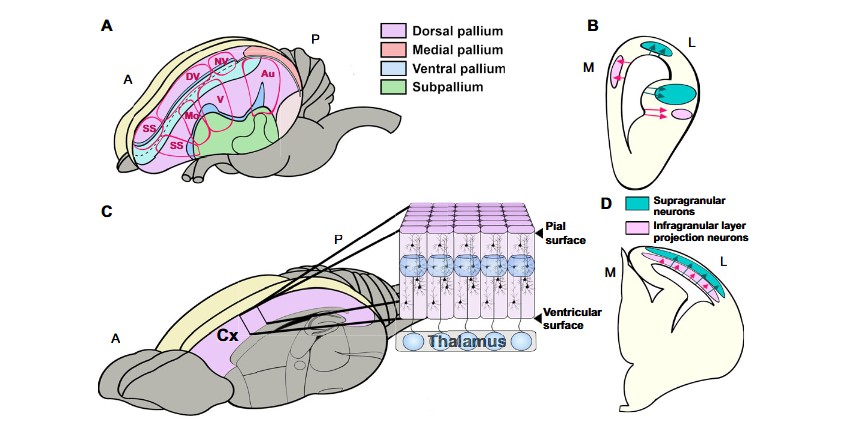
The broader implications are profound. As Güntürkün & Bugnyar (2024) emphasized, the avian pallium, despite lacking laminar organization and cortical folding (increasing the surface area for cognition in humans), supports neural architectures capable of parallel processing, long-term planning, and adaptive flexibility. Intelligence, it seems, is not the exclusive province of a particular lineage or brain type. Rather, it may arise in response to ecological complexity, social challenge, and evolutionary opportunity. In this light, corvids are not anomalies. They are a second origin of advanced cognition—a mirror through which we might examine our own minds.
That mirror also invites reflection on our responsibilities. Corvids, for all their cleverness, are not immune to the pressures of human expansion. Habitat destruction, poisoning, and persecution continue to threaten many species within this family. If intelligence is indeed a rare and precious phenomenon, then its preservation- regardless of the form it takes -should be among our highest priorities. We are not merely stewards of landscapes and species. We are custodians of minds, some startlingly like our own.
Read More
If you’re interested in animal awareness generally, I’ve written about this in a chat I had with author Richard Louv and recently addressed octopus cognition in a discussion of whether their intelligence is of alien origin (spoiler alert: it’s not).
References
- Bugnyar, T., & Heinrich, B. (2006). Pilfering ravens, social learning and social bonds. Philosophical Transactions of the Royal Society B.
- Clayton, N.S., & Dickinson, A. (1998). Episodic-like memory during cache recovery by scrub jays. Nature.
- Emery, N. J., & Clayton, N. S. (2005). The mentality of crows: Convergent evolution of intelligence in corvids and apes. Philosophical Transactions of the Royal Society B.
- Güntürkün, O., Bugnyar, T. (2024). Cognition without cortex: A neural perspective on corvid intelligence. Trends in Cognitive Sciences.
- Jacobs, I. (2015). On the origins of physical cognition in corvids. Lund University Dissertation.
- Jelbert, S.A., et al. (2016). Cognitive processes underlying tool use in New Caledonian crows. Current Opinion in Behavioral Sciences.
- Nieder, A. (2017). Inside the corvid brain: Probing the physiology of cognition in crows. Philosophical Transactions of the Royal Society B.
- Prior, H., Schwarz, A., & Gunturkun, O. (2005). Mirror-induced behavior in the magpie. Current Biology.
- Seed, A.M., Emery, N.J., & Clayton, N.S. (2009). Intelligence in corvids and apes: A case of convergent evolution? Philosophical Transactions of the Royal Society B.
- van Oort, A. (2022). Cognition, Intelligence and (Socio-)Ecological Correlates in Corvids. Utrecht University Student Thesis.
 ERIC DORFMAN
Leave a comment