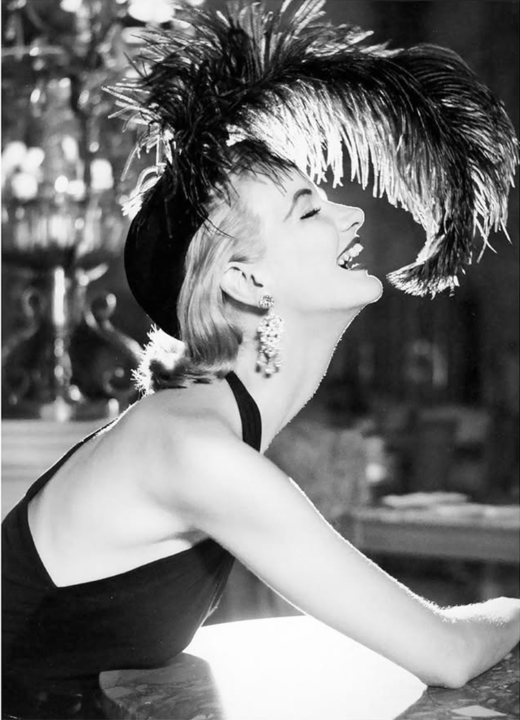

Keep young and beautiful,
It’s your duty to be beautiful,
Keep young and beautiful,
If you want to be loved…
Those lines from Annie Lennox’s timeless song still bites with irony, and might resonate with anybody old enough to have heard the song when it first came out more than 30 years ago. But long before the first powdered wig or tinted lip gloss, nature was already hard at work on the question of beauty as a form of persuasion. A strategy. A bid for attention. In the realm of evolutionary biology, the pursuit of aesthetic appeal is a matter of reproductive urgency.
Much has been written about sexual selection and its role in producing the peacock’s tail, the mandrill’s face, the iridescent shimmer of a hummingbird. But these are largely passive traits, the outcomes of long genetic arms races over generations. Interesting as those are, what I find even more fascinating are species that take matters into their own paws, claws, or prehensile tails, actively manipulating their appearance or environment in real time to increase their chances of mating.
In humans, we call it grooming, accessorizing, or dressing to impress. Our motivations are less constrained than nonhuman animals, layered as ours are with complex meaning: creative expression, social affiliation, protest, performance, or simply aesthetic choice. Other animals tend to enhance their appearance in direct service of reproductive success. Still, although species’ language and mechanics differ, the impulse to enhance one’s appearance or influence how one is perceived is surprisingly recognizable. The parallels between us and them are not always exact, but they offer a fascinating window into the shared evolutionary logic behind beauty and display.
The following examples illustrate some of the more deliberate and surprising ways in which animals modify their appearance or behavior as an active gesture of attraction, performed in real time. The parallels are not always exact, but they are telling, and they offer a fascinating window into the shared evolutionary logic behind beauty and display.
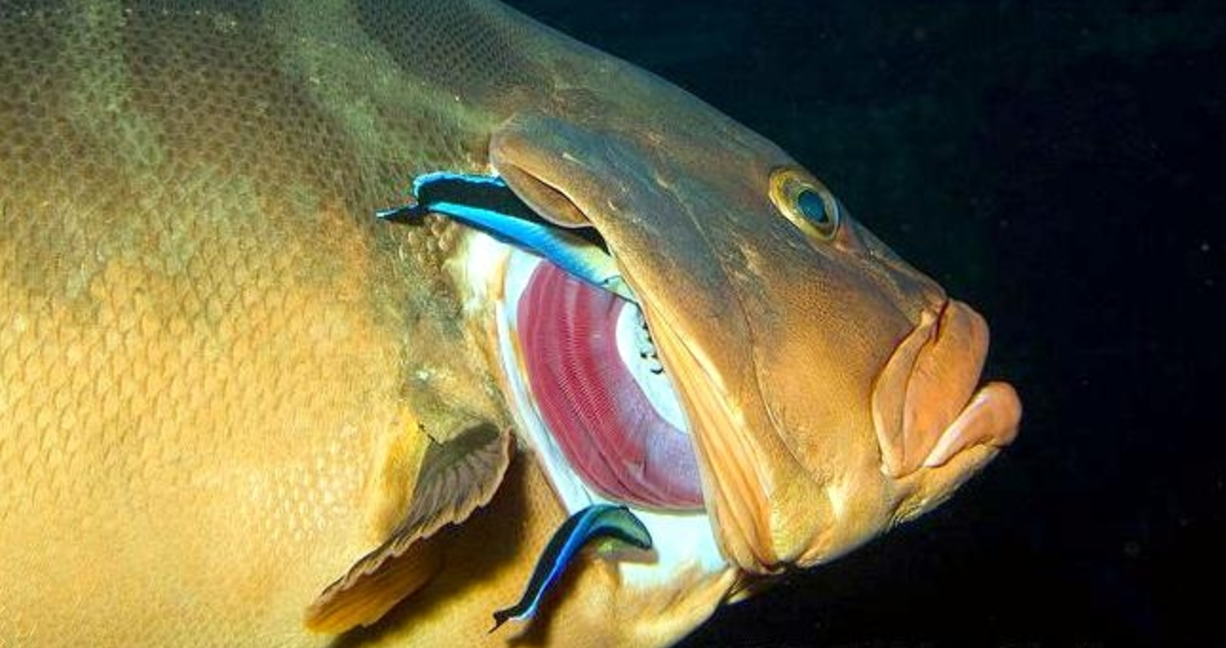
Cleaner Wrasse (Labroides dimidiatus)
Amid the corals of the Indo-Pacific, cleaner wrasses operate something very like a salon. Or maybe a car wash. Larger fish approach, hovering (relatively) patiently as the wrasse inspects them for parasites, nibbling them away with precision. These “clients” hover patiently, sometimes in a loose rank, while the cleaner wrasses finish with the current client. The setup is so predictable you can often find the same cleaning stations in use day after day. It’s textbook mutualism, but beneath the apparent altruism lies a subtler form of competition.
In observational studies, the smaller duller female cleaner wrasses favor males who are more diligent, more attentive, and more sought after by high-status clients (larger predatory fish). The males, in turn, perform better when they know they are being watched. They clean more carefully. They refrain from cheating (biting off healthy tissue). They elevate their social capital through service, and in doing so, they elevate their mating prospects.
The male wrasse does not change his colors or inflate a fin. His appeal is in what he does, not what he has. It is the behavioral equivalent of charisma. And charisma, here, is an observable trait with measurable consequences. A male who services more clients, and does so more meticulously, is seen as more reliable and more desirable. It is a fascinating example of how sexual selection can reward conscientiousness, or at least the performance of it, rather than flamboyance.
Furthermore, some evidence suggests that these fish are capable of distinguishing individual clients and even varying their service accordingly. They engage in so-called “strategic service,” giving better treatment to those who are likely to advertise their performance to others. It is social grooming, elevated to public relations.
Finally, take into account that cleaner wrasses are sequential hermaphrodites (all babies are females and the largest ones turn into males), and you get an extremely complex and subtle system.
Red Deer (Cervus elaphus)
During the rutting season, male red deer in Europe shift from understated herbivores to aggressive symbols of virility. Their behavior changes, of course. They roar, posture, clash antlers, but so too does their appearance.
Oil-producing sebaceous glands on the face and neck begin secreting a dark, oily substance. Stags deliberately rub this into their fur, staining themselves with a deepened hue that signals dominance and testosterone. The resulting “grease-staining” effect has been linked to greater mating success, suggesting that visual intensity carries weight in mate selection. It’s truth in advertising. Darker fur is correlated with higher testosterone levels, and females appear to use this cue in selecting mates. But the male’s role in applying the secretion, taking this cue and amplifying it through deliberate self-marking, introduces a behavioral component.
Grease-staining may also serve a secondary function as a deterrent to rival males. The visual signal doubles as a warning, much like the deep roar that accompanies it. In both cases, the body becomes a medium for broadcast. This is visual performance in the truest sense, a declaration of readiness and superiority. Additionally, if visual cues give an accurate appraisal of strength, it means that neither party has to fight, saving themselves from the risk of costly injuries.
This strategy is neither decorative nor subtle. It’s thick, pungent, and confrontational. There is no attempt to beguile. Instead, the male red deer declares, in no uncertain terms, that he is chemically, visually, and physically prepared to compete. And in the world of red deer, this is often enough.
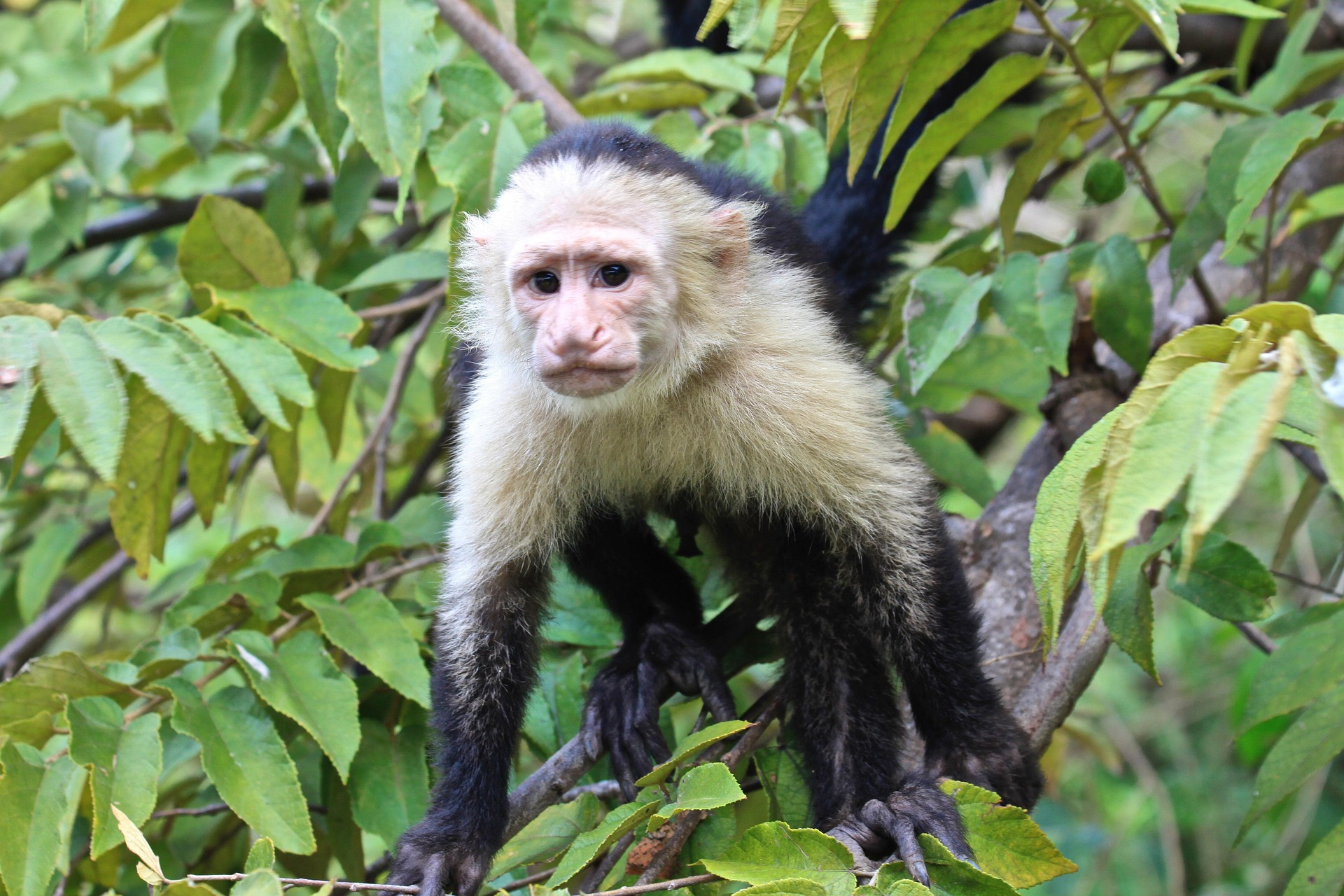
Capuchin Monkey (Cebus capucinus)
Some male capuchins engage in a behavior known as “anointing,” in which they crush millipedes and rub the secretions into their fur. The resulting benzoquinone compounds act as insect repellents, which is reason enough in a mosquito-rich environment. But there’s also theatricality to the gesture. Anointing is often conspicuous, even ritualized, seeming to serve a social or sexual function. Scent in primates carries a wealth of information, and a male who not only smells distinctive but demonstrates ingenuity in his self-care may be more attractive to females. He is advertising resilience, awareness, and perhaps even a kind of sophistication.
What makes the behavior particularly striking is the choice of material. Millipedes are toxic, and handling them is not without risk. By selecting and using these creatures for self-anointment, the monkey displays both knowledge and daring. The result is a chemical veil that may deter parasites, but also suggests a kind of low-level alchemy, transforming danger into allure.
Moreover, the act itself can become a social performance. Anointing is often done in groups, with individuals taking turns or assisting one another. It can function as a bonding ritual, strengthening alliances or reinforcing hierarchies. In such contexts, the lines between hygiene, communication, and attraction become blurred. Beauty, here, is relational as well as olfactory.

Tungara Frog (Engystomops pustulosus)
These small frogs, which occur from Mexico to South America are best known for their mating calls, a rhythmic whine punctuated by lower-pitched “chucks.” Males that produce more elaborate calls are more likely to attract females, even though the added complexity also makes them more vulnerable to predation.
What is less well known is their use of spatial manipulation. Some males call from elevated positions on floating vegetation or foam nests, subtly altering the acoustics and visual perspective of their display. From these platforms, their calls carry farther, their silhouettes appear larger, and their chances of mating increase.
This kind of display positioning is more than simple opportunism. It suggests a capacity to alter the environment to better serve a biological function. shaping not just the signal, but the stage upon which it is delivered. It is a performance-based strategy, not unlike choosing the best lighting in a theatrical production.
Female frogs, meanwhile, assess multiple cues: vocal complexity, frequency, call rate and, potentially, the visual presence of the caller in context. A male that can use his environment well is more likely to stand out, quite literally, from the chorus. In an ecological sense, this is resourceful. In an aesthetic sense, it borders on choreography.
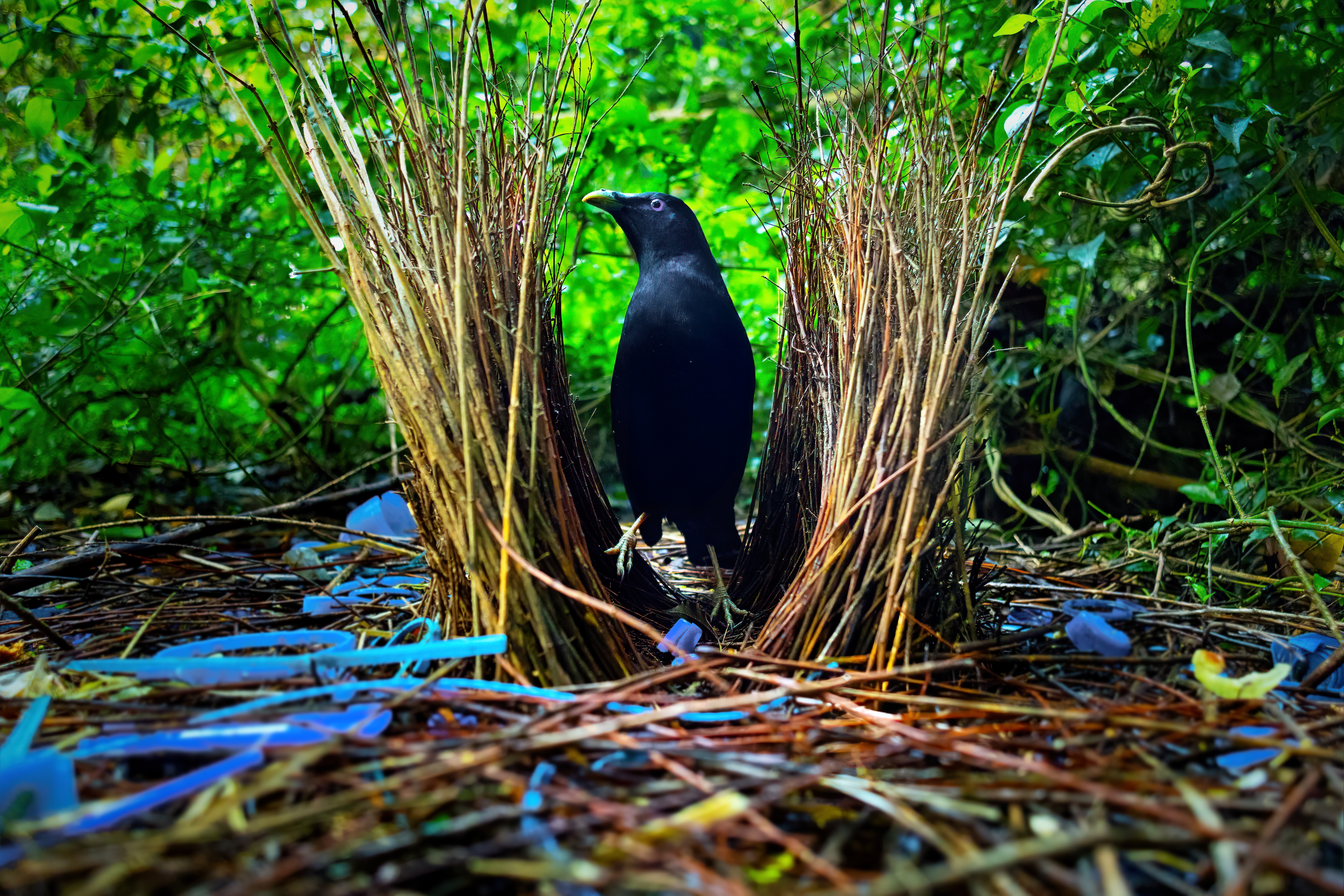
Satin Bowerbird (Ptilonorhynchus violaceus)
The satin bowerbird, a native of eastern Australia, has earned a reputation as a collector and decorator, constructing elaborate bowers and adorning them with objects: feathers, berries, and shells, always of a single color. Most choose blue, but red, yellow, and other colors sometimes catch their eye instead. Their fame for this lies, in part, in the quirky things that also make it into their nest: drinking straws; bottle caps; ballpoint pens and their lids; plastic toys; toothbrushes; clothespins. In fact, the bowerbird (unlike the albatross) could be said to owe a debt of gratitude to the plastics industry for increasing its reproductive success.
They’re iconic collectors, but beyond the display of wealth and taste, there lies a more subtle aesthetic sensibility. Males paint the walls of their bowers with a mixture of saliva, charcoal, and chewed-up plant material, darkening the space to create contrast against their iridescent plumage. The result is both dramatic and strategic. By controlling the environment, the male enhances the visual impact of his presence.
What emerges is something akin to installation art. The bower is an architectural frame designed for illusion rather than shelter. From the female’s point of view, the entire display space serves to augment and magnify the male’s traits in a carefully calibrated experience.
How consciously aware he is of his choices remains a mystery. But he could be very aware, and with good reason. There is evidence that females evaluate not only the objects collected but their arrangement. Symmetry, color consistency, and spatial coherence all contribute to the appeal. In this sense, the male’s attractiveness is co-authored by his aesthetic choices. He is both signalling fitness and constructing it in three dimensions. Beauty, in some cases, is quite literally built.

Dung Beetle (Onthophagus taurus)
Dung beetles, as their name suggests, are intimately connected to the less glamorous aspects of life. They feed on dung, bury it, and in many cases, roll it into perfectly spherical balls used as food stores or breeding chambers. Far from being lowly scavengers, dung beetles play a critical role in nutrient cycling and soil health across ecosystems worldwide. They are also surprisingly diverse, with more than 6,000 known species spread across every continent except Antarctica.
Among them, Onthophagus taurus stands out for its striking sexual dimorphism and elaborate mating strategies. Males come in different morphs, often equipped with dramatic horns used in battles over mates. And yet, even in the world of dung and underground tunnels, presentation matters. The dung beetle’s courtship is as physical as it is performative. In species with horned males, the size and symmetry of those horns play a role in competition and female choice. In species with horned males, the size and symmetry of those horns play a role in competition and female choice. Some beetles appear to maintain the cleanliness and polish of their exoskeletons before conflict or courtship. The gleam of a freshly groomed carapace, combined with the symmetry of the horns, might serve as an honest signal of fitness.
Horned beetles engage in both direct and indirect competition. The largest males use their horns in combat, defending tunnels or access points to females. Smaller or less well-armed males may attempt to sneak past, relying on stealth (a tactic also used by elephant seals, at the opposite end of the size spectrum). A male who appears robust, well-kept, and symmetrical communicates health and developmental stability. Moreover, exoskeletal grooming is not trivial. In a dusty, dung-filled environment, maintaining a polished surface requires effort and attention. The shine itself becomes a kind of luxury signal, visible evidence of the expenditure of energy on self-maintenance. And in a world where resources are contested ball-by-ball, that shine might tip the scales.
Dive deeper
- Bshary, R., & Grutter, A. S. (2002). Asymmetric cheating opportunities and partner control in a cleaner fish mutualism. Animal Behaviour, 63(3), 547–555.
- Bshary, R., & Grutter, A. S. (2006). Image scoring and cooperation in a cleaner fish. Nature, 441, 975–978.
- Doucet, S. M., & Montgomerie, R. (2003). Multiple sexual ornaments in satin bowerbirds: Ultraviolet plumage and bowers signal different aspects of male quality. Behavioral Ecology, 14(4), 503–509.
- Lincoln, G. A., Guinness, F., & Short, R. V. (1991). The way of the stag: physical characteristics and endocrine mechanisms in red deer. Symposia of the Zoological Society of London, 57, 1–41.
- Valderrama, X., Robinson, J. G., & Attygalle, A. B. (2000). Seasonal anointment with millipedes in a wild primate: a chemical defense against insects? Journal of Chemical Ecology, 26(12), 2781–2790.
- Ryan, M. J., & Rand, A. S. (2001). Sexual selection and signal evolution: the ghost of biases past. Philosophical Transactions of the Royal Society B, 356(1415), 519–529.
- Borgia, G., & Mueller, U. (1992). Bower destruction, decoration stealing and female choice in the satin bowerbird. Behavioral Ecology and Sociobiology, 29(3), 177–187.
- Emlen, D. J. (1997). Alternative reproductive tactics and male-dimorphism in horned beetles: an evaluation of models for the evolution of conditional strategies. Animal Behaviour, 54(5), 973–986.
 ERIC DORFMAN
Leave a comment