Commodus and the problem of the born ruler
On a recent trip to New York City, I saw an ad for the grocery delivery service FreshDirect on top of a taxi. It showed a few apples, and above them ran the line “Never far from the tree.” For some reason it set me thinking about Emperor Marcus Aurelius and his son, Commodus, whose apple landed a long way off. Marcus was a philosopher as well as an emperor, disciplined and understated, and his Meditations still sell steadily nearly two thousand years after he wrote them. Commodus took the opposite course, and he arguably rivals Nero as Ancient Rome’s most destructive ruler. During his twelve years as sole emperor he executed senators and seized their estates, fought in the arena as a gladiator (a profession Romans ranked alongside prostitution), and renamed Rome after himself. He left the work of governing to favorites and died at the hands of his own inner circle. How could this have happened?
Historians have dwelt on the contrast from the start. Cassius Dio, who entered the Senate under Commodus, wrote that with Marcus’s death his history “now descends from a kingdom of gold to one of iron and rust.” Writing in the eighteenth century, Edward Gibbon fixed the same moment as the end of the period in which the human race was “most happy and prosperous.” For both writers, Commodus marks the turn.
The puzzle is that Marcus tried hard. He took his son’s education seriously, brought him into public life as a child, and made him co-emperor at fifteen. He thought carefully about virtue, and he had an empire’s resources to apply to the question. How did such deliberate preparation produce an emperor who repudiated almost everything his father valued?
The inheritance of an empire
Marcus belonged to the era of the so-called Five Good Emperors: Nerva, Trajan, Hadrian, Antoninus Pius, and Marcus himself. Their reigns are often presented as an experiment in succession by merit, in which each emperor adopted the most capable man available.
The record is messier. Adoption filled a gap, since each of the four emperors before Marcus died without a surviving son, and family ties shaped every choice. Hadrian, for example, named Antoninus Pius as his heir in AD 138 on condition that Antoninus adopt the sixteen-year-old Marcus and the seven-year-old Lucius Verus. Merit counted, alongside kinship, politics, and the goodwill of the Senate. Marcus was the first of these emperors with a son of his own, so his reign gave the system its first test.
Marcus profited from the arrangement for most of his life. Adopted at sixteen, he spent twenty-three years as heir before taking power in 161. Antoninus granted him the tribunician power in 147, which made him a junior partner in government for more than thirteen years. Throughout that apprenticeship an older man stood above him, and Marcus answered to him. By the time he became emperor at thirty-nine, he knew the institutions of Roman government and the people who ran them.
Commodus came to the succession by another road. He was born on 31 August 161, a few months after his father took the throne, and his claim strengthened as his brothers died. His twin, Titus Aurelius Fulvus Antoninus, died at four, and a younger brother, Marcus Annius Verus, died in 169. From then on Commodus was Marcus’s only surviving son.
Roman expectations favored keeping power in the family. A biological son meant continuity, and passing over a living son for an outsider would have created a rival claimant with a faction ready to back him.
Events in 175 made the matter urgent. Avidius Cassius, the commander in the East, proclaimed himself emperor on a false report that Marcus had died. Dio records a story that Marcus’s wife, Faustina, had encouraged Cassius because she feared her ailing husband would die while Commodus was still young. The revolt collapsed within three months when Cassius’s own officers killed him, but it showed how quickly rivals could move on a rumored vacancy. Faustina died that winter in Cappadocia.
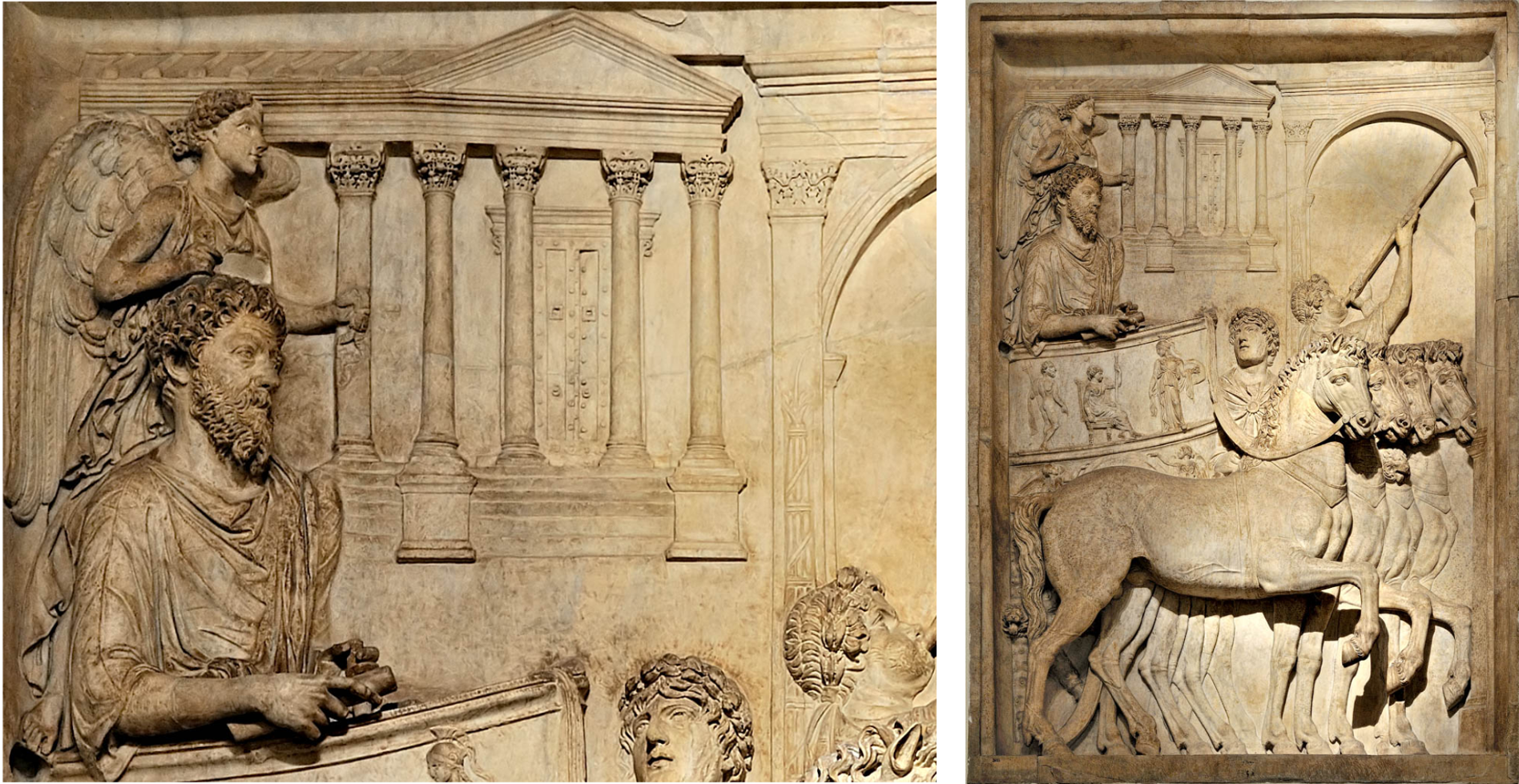
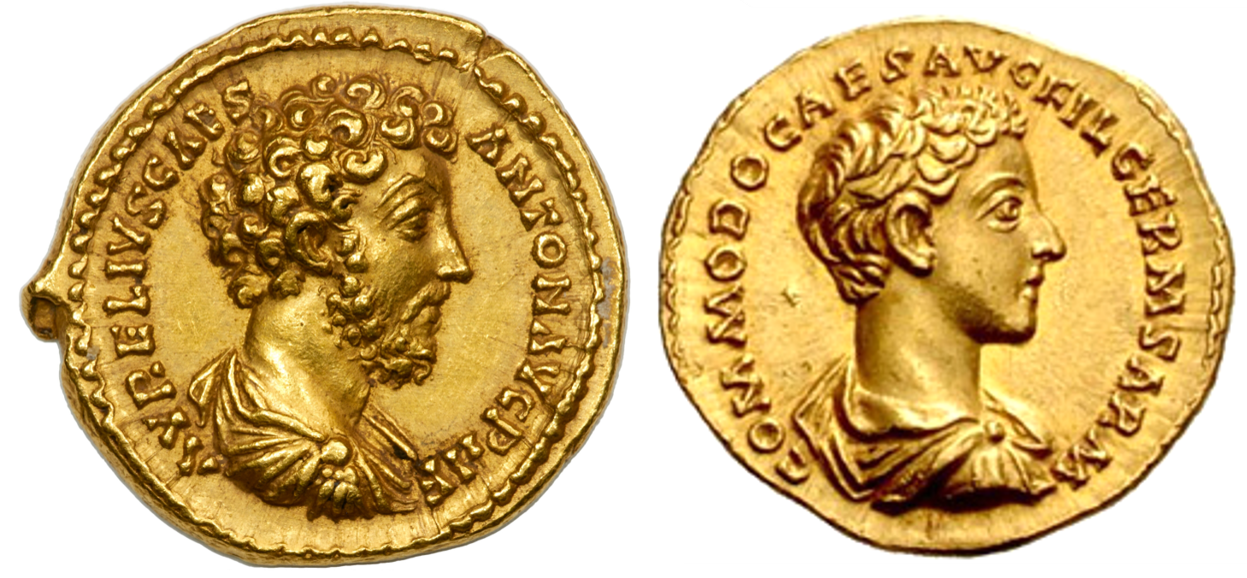
Marcus moved quickly. Commodus had held the title of Caesar since the age of five. He assumed the toga of manhood in 175, shared his father’s triumph in December 176, and was named Augustus in 177 at fifteen. That year he held the consulship as well, the youngest consul Rome had yet seen. These steps secured his position, and they gave him supreme rank before any responsibility had tested him.
The education of a prince
Commodus received an education available only at the top of Roman society. The Historia Augusta names his tutors: Onesicrates for Greek literature, Antistius Capella for Latin, and Ateius Sanctus for rhetoric. Galen, the most celebrated physician of the age, looked after the boy’s health while Marcus was away on campaign. Few children in the ancient world had so much expertise gathered around them.
Much of what we know of his childhood comes from writers who already knew how the story ended. The Historia Augusta claims that at twelve he ordered a bath attendant thrown into the furnace for drawing his water too cool, and that a servant spared the man by burning a sheepskin to supply the smell. The same biography judges that his tutors did him little good. Roman biographers used childhood anecdotes to foreshadow adult vice, and this one calls for caution.
The firmer evidence concerns his public career. Commodus joined his father on the northern frontier, took part in victory ceremonies, and accumulated the titles of imperial authority. Marcus plainly intended him to learn government by watching it.
Watching government as its future master differs from serving it. Marcus spent his apprenticeship as a subordinate, accountable to Antoninus and surrounded by senators who would one day be his peers. Commodus learned government as the person everyone in the room needed to please. Generals, senators, and tutors all knew whom they would serve within a few years, and they behaved accordingly.
People learn judgment largely from consequences. Children test limits and adjust when they meet resistance, and the process depends on honest feedback. The imperial court supplied that feedback in short measure. A tutor’s livelihood depended on the household, and an ambitious official’s career depended on the heir’s goodwill. As Commodus grew more important, contradicting him grew more costly.
Marcus could choose the tutors and set the example. Everyone else around his son answered to incentives he had little power to change.
The psychology of inherited power
Marcus understood the dangers of his own position as clearly as any ruler whose thoughts survive. The Meditations return repeatedly to anger, vanity, and the corruptions of office. In one passage he warns himself: “Take care that you are not made into a Caesar, that you are not dyed with this dye; for such things happen.” Read today, it doubles as a warning to his son. For Marcus, self-command required daily effort, and the job pressed constantly against it.
The office Commodus inherited made that effort essential. A Roman emperor controlled appointments, armies, and finances, along with the lives of anyone he judged a threat. The Senate, the magistrates, and the courts continued to function, but their independence rested on the emperor’s temperament. A restrained ruler could use these institutions to govern well, and a ruler absorbed in his own status could turn the same machinery to self-glorification.
Modern psychology offers two useful frameworks here, with the caveat that a diagnosis across eighteen centuries lies beyond either of them. The first concerns adolescence. Laurence Steinberg’s research on adolescent risk-taking describes a period in which the brain’s reward-seeking systems mature ahead of the systems that regulate impulse, a gap that closes only in the early to mid-twenties. Commodus became co-emperor at fifteen and sole ruler at eighteen, squarely inside that window.
The second concerns power itself. Dacher Keltner and his colleagues have proposed that power activates approach behavior and loosens inhibition. Powerful people attend more closely to their own goals, read others less carefully, and act more readily on impulse. Most participants in that research held power briefly or modestly, while Commodus held absolute power from boyhood.
Marcus’s decision to elevate his son in 177 had sound political logic. It strengthened the succession and let the young man learn under supervision. The same decision placed supreme status on an adolescent brain, at the stage of life when restraint is still developing.
Living in the shadow of a philosopher
Marcus embodied a demanding idea of imperial duty. His reign consisted largely of frontier war, the Antonine Plague, and the administration of a vast state. His writing prizes modesty and endurance, and it asks private wishes to give way to public obligation. For a son, that made for a high and austere standard.
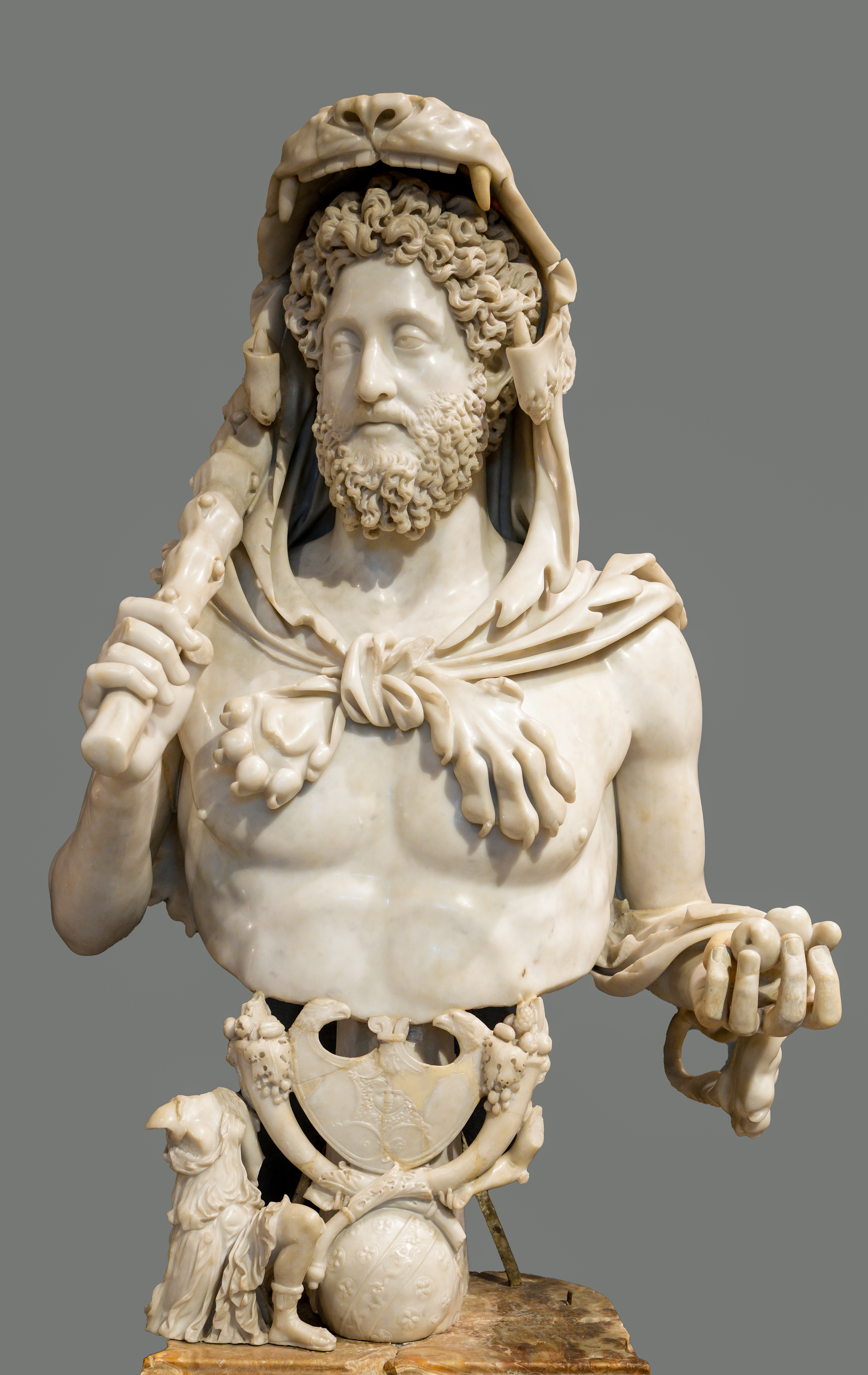
Commodus built a public identity on nearly opposite terms. He hunted, fought in staged combats, and fashioned himself as Hercules. Dio describes him shooting a hundred bears in a single day from a raised gallery around the arena. In gladiatorial bouts he fought with a wooden sword in his left hand against opponents armed with wands, so the outcome was settled in advance. Dio adds a darker episode. Commodus once gathered men in the city who had lost their feet to disease or accident, fitted their legs with coverings shaped like serpents, and clubbed them to death while pretending they were the mythical giants.
Roman attitudes toward these displays were mixed. Romans admired hunting in aristocrats as a show of courage. Professional gladiatorial combat belonged to slaves, convicts, and the disgraced, and an emperor in the arena insulted the dignity of his office. Commodus seems to have enjoyed the insult. Dio, obliged to attend as a senator, recorded one performance in which Commodus killed an ostrich and cut off its head. He then walked toward the senators’ seats with the head in one hand and his bloody sword in the other, grinning. Dio chewed laurel leaves from his wreath and urged those beside him to do the same, to hide their laughter, since laughing would likely have cost them their lives.
In his final years the Hercules identity became official imagery. Commodus styled himself Hercules Romanus, and his coins showed him in the lion skin. A marble bust in the Capitoline Museums presents him wearing the skin of the Nemean lion and holding the hero’s club, carved with the finish of the best imperial portraiture. Marcus had located authority in inward discipline. His son located it in physical display and in a claim to be the god himself.
One possibility, offered here as a hypothesis, is that Commodus sought distinction on ground his father had left empty. A father admired for intellect and self-restraint sets a standard that a son can meet or exchange for a contest he can win. Commodus’s private motives are lost to us, and his public choices moved steadily away from his father’s example.

The emperor and his historians
Every account of Commodus depends on three ancient sources, each with its own slant. Cassius Dio, the most important, was a senator who lived through the reign and watched colleagues die. His history reflects the fears of a class whose survival depended on the emperor’s mood. Herodian, a Greek writer working in the mid-third century, offers a second narrative. The Historia Augusta, compiled in the late fourth century, mixes useful material with invention, and modern historians handle it with care.
All three wrote within a tradition that explained politics through character. Good emperors showed moderation, respected the Senate, and cared for the public welfare. Bad emperors were cruel, extravagant, and contemptuous of convention. Commodus, with his arena appearances and divine pretensions, fit the second template closely. The reports of executions come from the class that suffered them, and readers should weigh them with that in mind.
Dio also preserves a judgment that cuts against the template. Commodus, he wrote, was “not naturally wicked, but, on the contrary, as guileless as any man that ever lived.” His simplicity, together with his cowardice, “made him the slave of his companions.” Through them, Dio says, he first missed the better life out of ignorance and then slid into habits of lust and cruelty “which soon became second nature.” Coming from a man with every reason to hate him, the assessment is notably balanced. It describes someone shaped by his surroundings as much as by his nature.
Herodian supplies a line that fits this reading. In the accession speech Herodian gives him, Commodus tells the troops, “I alone was born for you in the imperial palace.” Ancient historians routinely composed such speeches themselves, so the words are Herodian’s, and the theme he chose for them is telling.
The political record supports Dio’s view. Commodus made peace on the northern frontier within months of his accession, and Herodian blames courtiers who urged him toward the comforts of Rome. In 182 his sister Lucilla and several senators plotted to kill him. After the plot failed, Commodus withdrew from the work of government and turned on the aristocracy, and executions and confiscations followed. Real authority passed to favorites, first the praetorian prefect Perennis and then the chamberlain Cleander, a freedman who sold offices on a grand scale. Both fell. Perennis was executed in 185, and when a grain shortage provoked riots in 190, Commodus handed Cleander over to the crowd.
The final years brought the most extravagant self-presentation of all. Rome became Colonia Commodiana, and the twelve months were renamed after the emperor’s own titles. Late in 192, according to Dio, Commodus planned to have both incoming consuls killed and to open the new year as consul and gladiator, emerging from the gladiators’ barracks. His inner circle acted first. On the last day of the year his mistress Marcia, the praetorian prefect Laetus, and the chamberlain Eclectus gave him poison in a dish of beef. When he vomited it up, they sent in Narcissus, an athlete who served as his wrestling partner, and Narcissus strangled him in his bath.
His death ended the Antonine dynasty and opened a year in which five men claimed the throne.
The limits of stewardship
Marcus failed to produce a successor in his own image, and the failure raises a larger question about how character passes between generations.
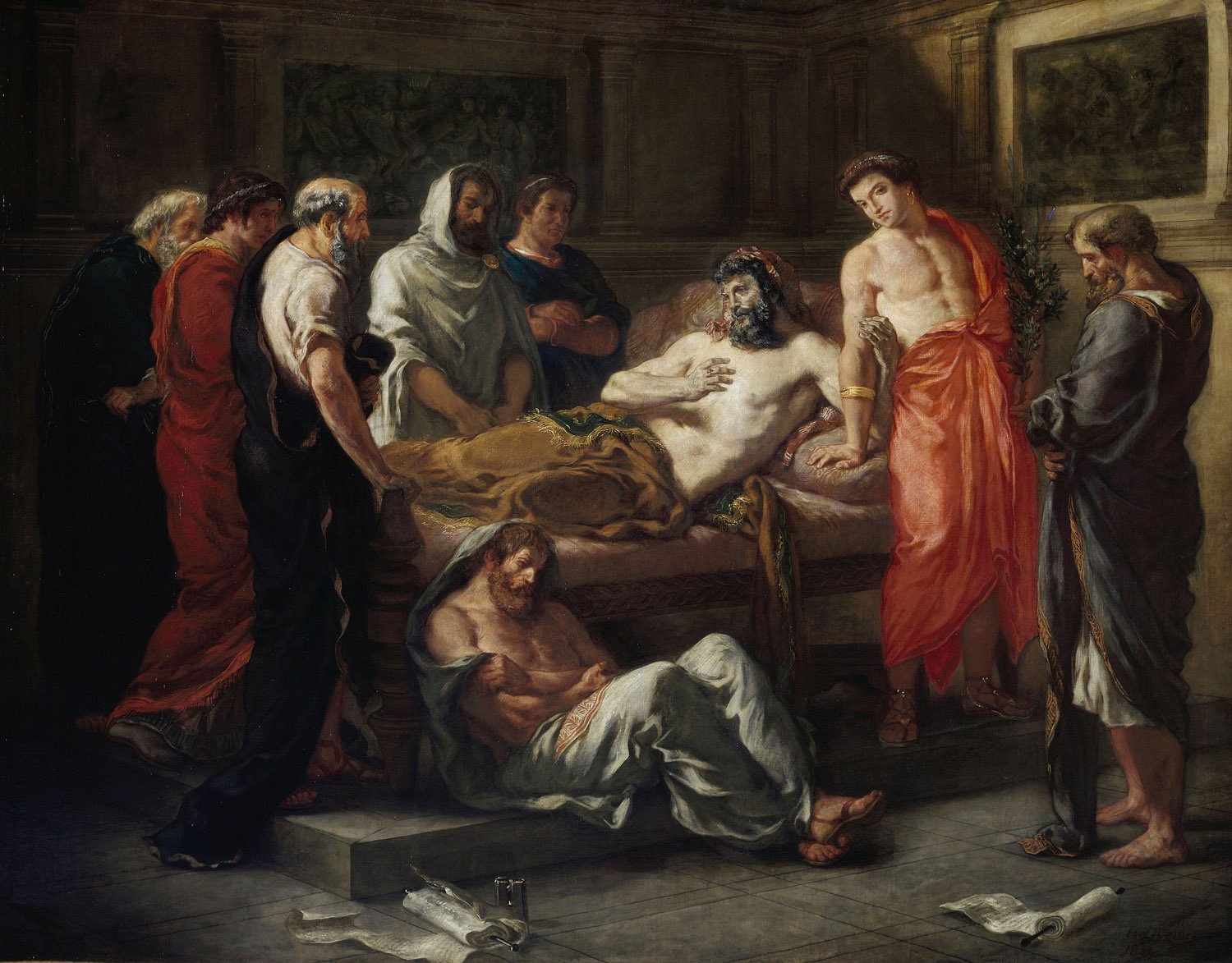
He did most of what a conscientious father could do. He provided the best available education, brought his son into public life, took him on campaign, and secured his place in government. On his deathbed, according to Herodian, he gathered his friends and asked them to act as fathers to the boy. Each step met the political expectations of the time and the practical need for continuity.
Those same steps placed Commodus in conditions far from the ones that formed Marcus. The father reached maturity through decades of subordinate service and private reflection. The son reached supreme rank as a teenager, surrounded by people whose careers depended on his favor, and his privileges grew at least as quickly as his responsibilities. Marcus also faced the gap between understanding virtue and teaching it. The Meditations show a precise grasp of how desire, judgment, and conduct interact. Producing those qualities in another person depends on temperament and experience, and even an emperor can influence those only at a distance.
He may have seen the problem and judged it manageable. Making Commodus co-emperor suggests he trusted supervised experience to do its work, at a time when war on the Danube left him little room for alternatives. Marcus had been in poor health for years, yet he could hardly have known how short the supervision would be. He died in 180, three years after making his son Augustus.
Hereditary monarchy compounded the risk. A prince acquired his political future at birth, long before anyone could judge his abilities. The system rewarded continuity, while the capacity to govern developed on its own schedule. Marcus understood the moral hazards of power as well as anyone, yet his arrangements for the succession handed that power to a young man still in formation. His devotion to dynastic continuity and to his son’s advancement matched what Romans expected of a responsible father, and the outcome showed the danger built into those expectations.
The scientific question: age or power?
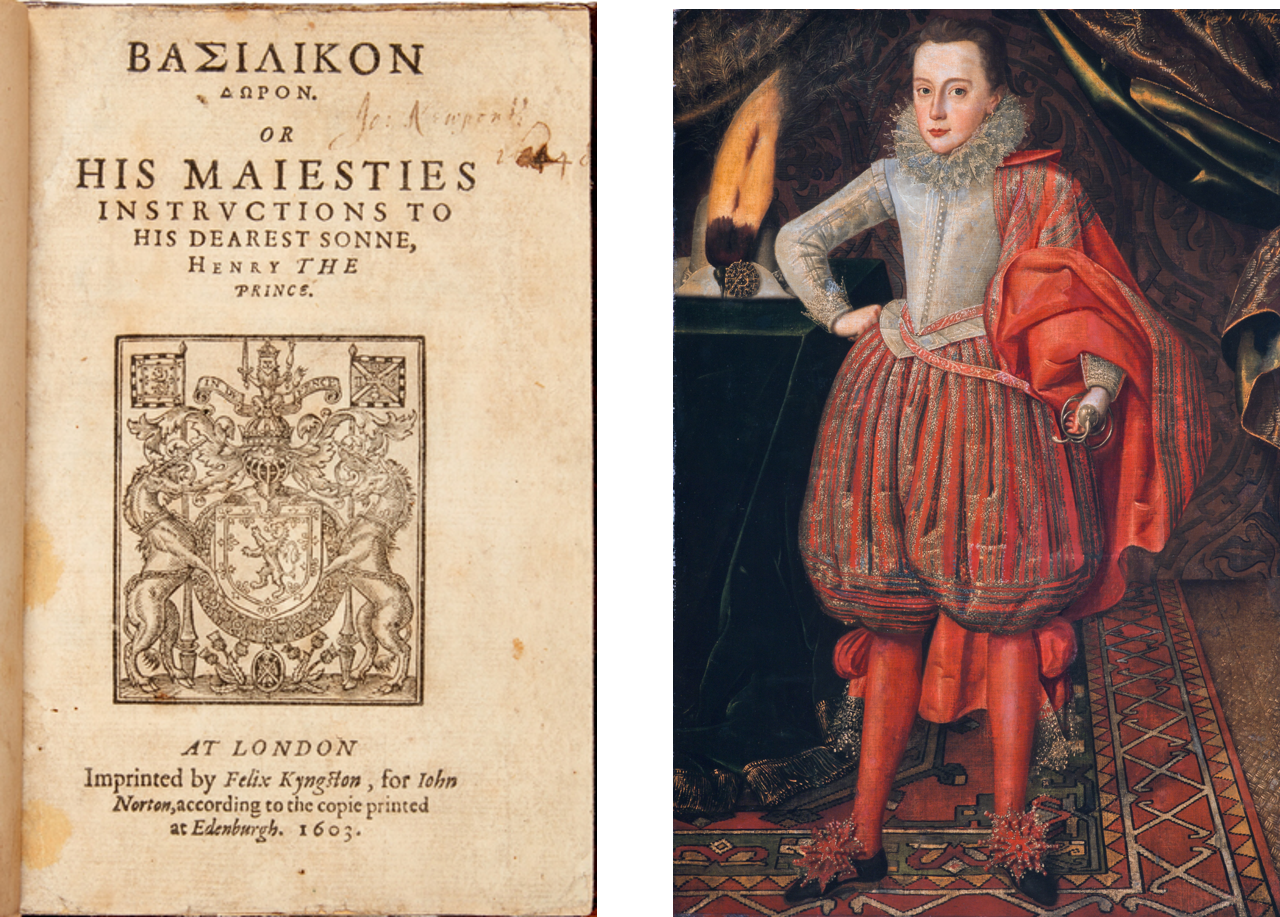
A later case helps separate the two frameworks. More than fourteen centuries after Commodus, Charles I of England grew up inside another hereditary monarchy. His father, James I, was hardly the figure Marcus was, though he shared his taste for writing about kingship. In 1599 James wrote Basilikon Doron, a manual of royal conduct, for his elder son, Henry. Henry died in 1612, and Charles, who was nearly twelve, became heir to a role prepared for his brother.
Charles also differed from Commodus in age. He became king in 1625 at twenty-four, beyond the developmental window Steinberg describes. From his father he inherited a firm belief that kings ruled by divine right and answered to God alone. He governed for eleven years without calling Parliament, lost a civil war, and in 1649 was tried and executed. Commodus died at the hands of his inner circle and Charles at the end of a trial his enemies created for the purpose, so the two endings differ in almost every respect.
Two cases hardly constitute scientific evidence, though the comparison is suggestive. Charles grew up a second son and came to the throne as an adult, which weakens the case for age alone. What he shared with Commodus was a court that treated his authority as given at birth and a circle that found contradiction costly. That points toward Keltner’s account of power more than Steinberg’s account of adolescence. Marcus devoted his life to cultivating wisdom and self-discipline, yet his son carried little of either into the role. Was Commodus simply an unfortunate exception, or does growing up with the expectation of absolute power make its responsible exercise so difficult that even a philosopher’s son could fail at it?
Read More
Cassius Dio. Roman History, Book 73. Translated by Earnest Cary. Loeb Classical Library, vol. 9. Cambridge, MA: Harvard University Press, 1927. https://penelope.uchicago.edu/Thayer/E/Roman/Texts/Cassius_Dio/73*.html
Gibbon, Edward. (1776–1788) The History of the Decline and Fall of the Roman Empire. 6 vols. London: W. Strahan and T. Cadell. https://www.gutenberg.org/ebooks/25717
Herodian. History of the Roman Empire, Book 1. Translated by Edward C. Echols. Berkeley: University of California Press, 1961. https://www.livius.org/sources/content/herodian-s-roman-history/
Historia Augusta. Life of Commodus. Translated by David Magie. Loeb Classical Library. Cambridge, MA: Harvard University Press, 1921. https://penelope.uchicago.edu/Thayer/E/Roman/Texts/Historia_Augusta/Commodus*.html
Keltner, D., Gruenfeld, D. H., & Anderson, C. (2003). Power, approach, and inhibition. Psychological Review, 110(2), 265–284. https://doi.org/10.1037/0033-295X.110.2.265
Marcus Aurelius. Meditations. Translated by George Long. https://www.gutenberg.org/ebooks/2680
Steinberg, L. (2008). A social neuroscience perspective on adolescent risk-taking. Developmental Review, 28(1), 78–106. https://doi.org/10.1016/j.dr.2007.08.002
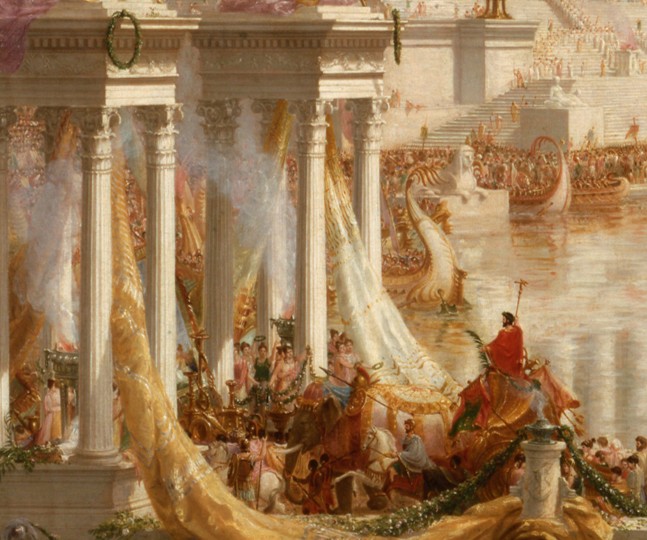
Featured Image: Thomas The Consummation The Course of the Empire 1836. New York Historical Society.


Leave a Reply