This is a précis of my latest Substack article on The Attentive Naturalist.
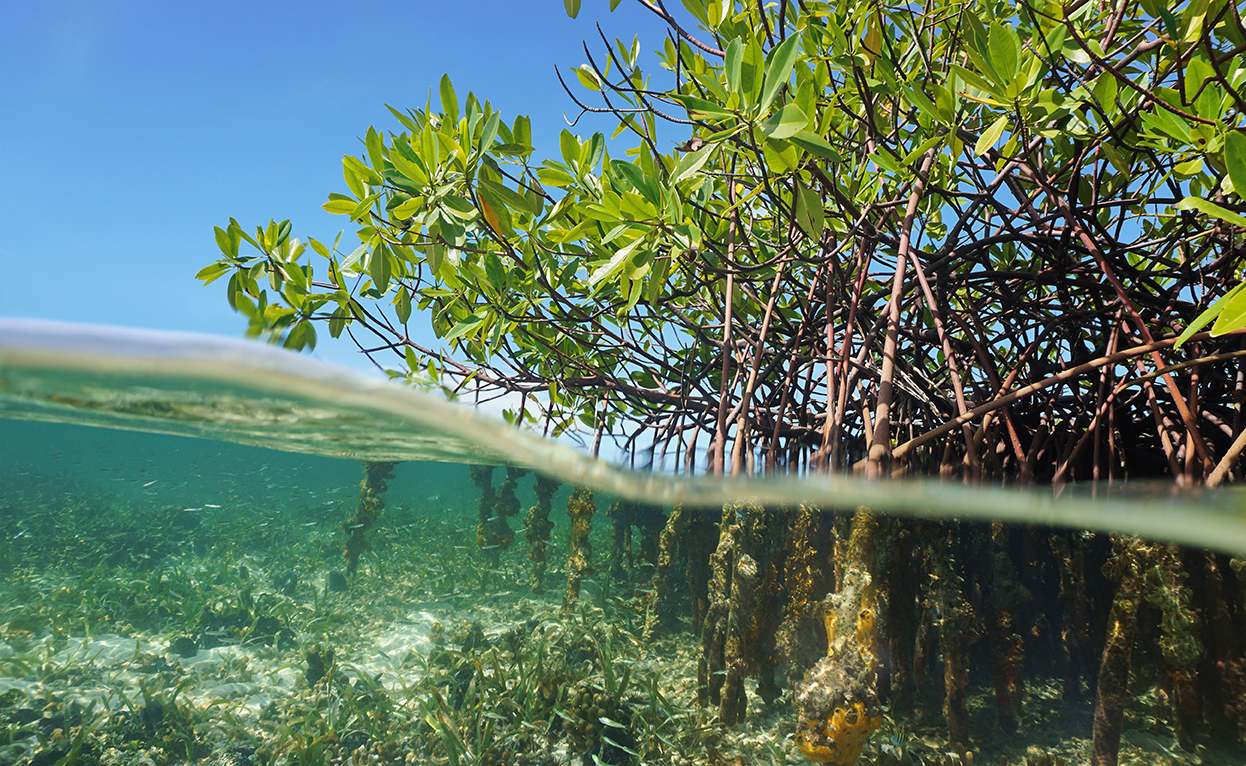
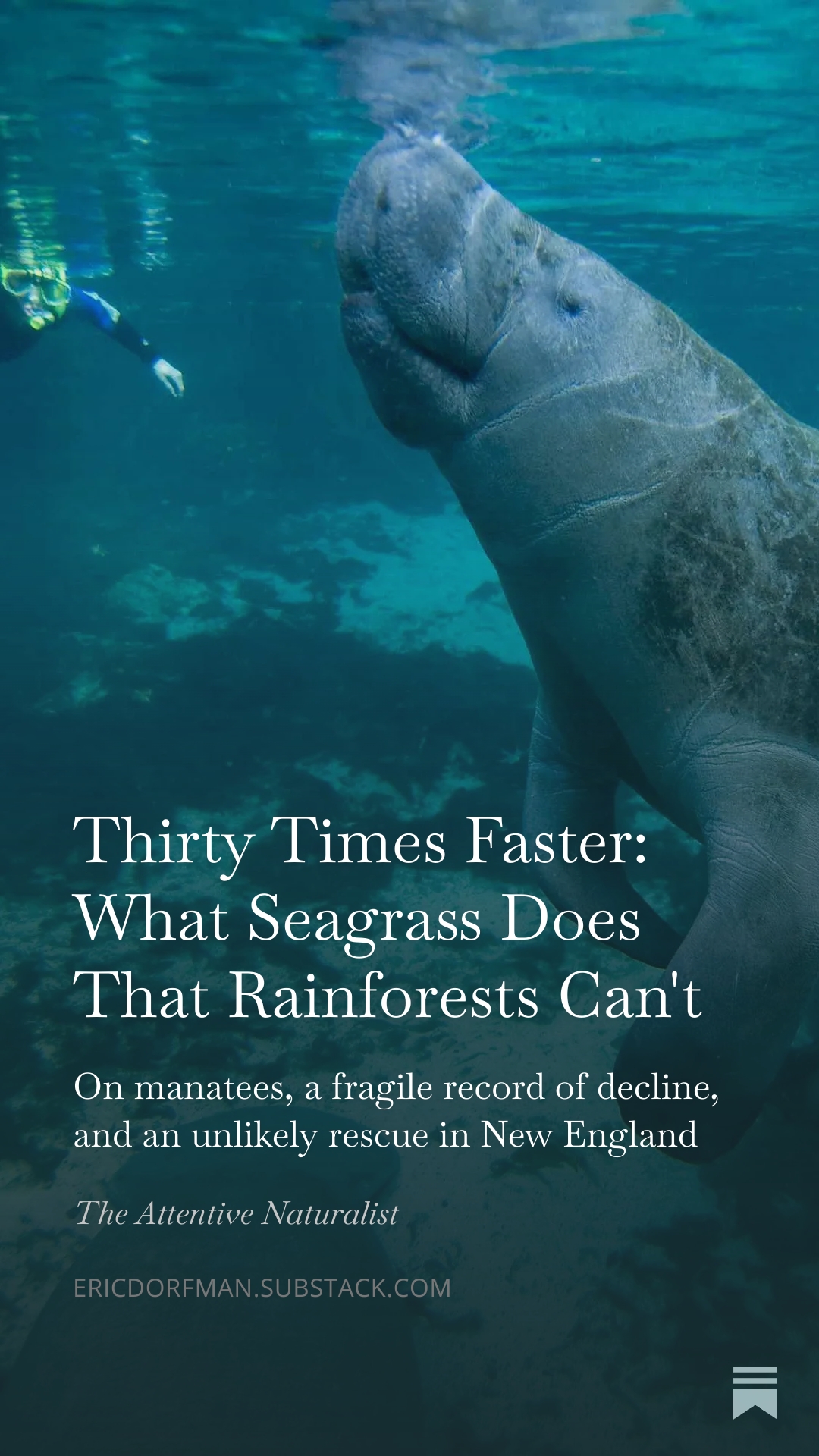
For a few months during the pandemic, I ate lunch most days with a webcam trained on manatees at Homosassa Springs, FL. It turned a slow, nearly blind, wildly beloved animal into daily company, and it got me thinking about the plant on which its entire existence depends: seagrass, a meadow most people will never notice and can’t picture, quietly doing more for the planet’s carbon budget than a tropical rainforest.
This week’s essay follows that thread from a starving manatee in the Indian River Lagoon to my own doctoral fieldwork in Brisbane Water, Australia, where the seagrass beds I once studied have lost most of their extent in my working lifetime. It lands, eventually, in Provincetown, Massachusetts, where two scientists rented a U-Haul on a single day’s notice to rescue twenty-two years of global seagrass specimens from a lab renovation, and very nearly didn’t make it in time.
It’s a piece about a nearly anonymous plant, an invisible crisis, and what it actually takes to keep a scientific record alive long enough for it to matter.
Read the full essay for free on Substack
 ERIC DORFMAN
Leave a comment